

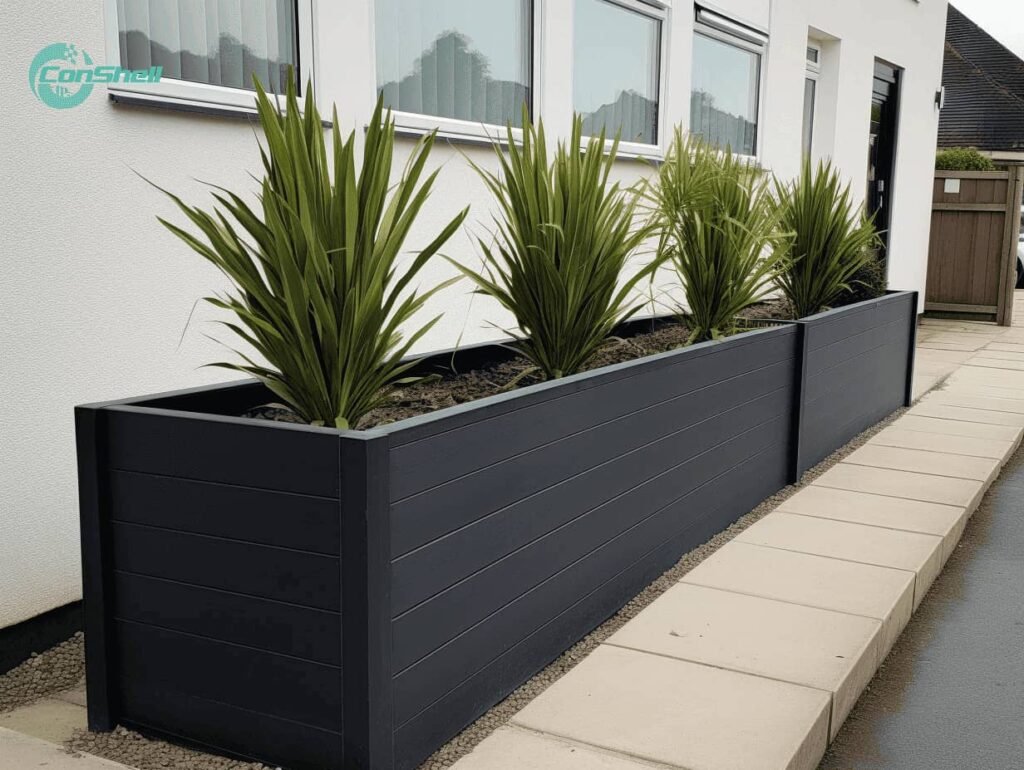
If you are sourcing planters for a commercial landscape, rooftop garden, hotel entrance, public plaza, or residential development, the material choice matters.
A GRC planter box may look like a standard concrete planter at first glance, but its structure, weight, design flexibility, and project application are quite different.
A GRC planter box is a precast planter made from glass fiber reinforced concrete. It combines cement, fine aggregate, water, admixtures, and alkali-resistant glass fibers to create a lighter, durable, and customizable planter for architectural and commercial landscape projects.
Below, we will explain what a GRC planter box is, how it differs from traditional concrete planters, where it is commonly used, and what buyers should check before placing an order.
What Does GRC Mean?
GRC stands for glass reinforced concrete.
In North America, many buyers and architects may also see the term GFRC, which stands for glass fiber reinforced concrete. In practical project discussions, GRC and GFRC usually refer to the same category of material. The Architectural Precast Association describes GFRC as GRC internationally, made with cement, fine aggregate, admixtures, water, and alkali-resistant glass fiber reinforcement.
The main difference between GRC and ordinary concrete is the reinforcement system.
Traditional concrete often relies on steel reinforcement, especially for structural elements. GRC uses alkali-resistant glass fibers distributed within the cement-based matrix. These fibers help improve flexural and tensile performance, allowing the material to be produced in thinner sections for certain architectural applications.
For planter boxes, this material structure is important.
It allows manufacturers to create products with a solid concrete-like appearance while reducing unnecessary weight compared with many thick traditional concrete planters.
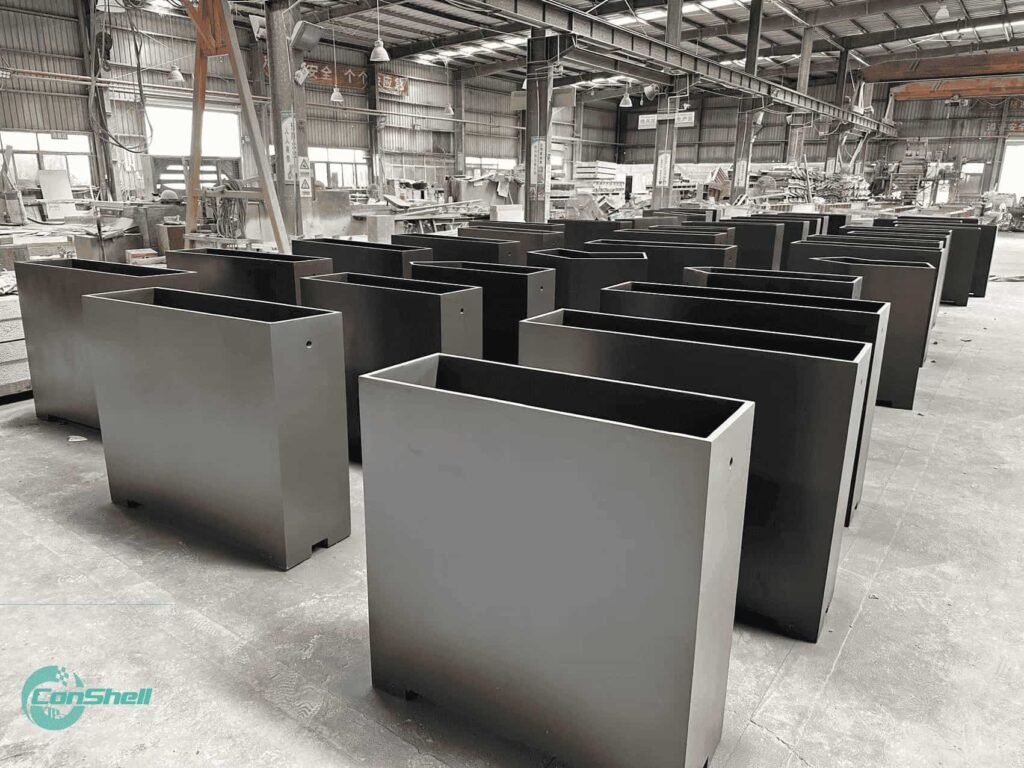
What Is a GRC Planter Box Made Of?
A typical GRC planter box is made from several key materials.
These usually include cement, fine aggregate, water, admixtures, pigments if color is required, and alkali-resistant glass fibers.
The alkali-resistant glass fibers are especially important because concrete is an alkaline environment. ASTM C1666 covers minimum requirements for alkali-resistant glass fibers used in GFRC, spray-up GFRC, premix GFRC, fiber-reinforced concrete, and other cement-based products.
The International Glassfibre Reinforced Concrete Association also publishes guidance for GRC production, covering raw materials, production, curing, storage, quality assurance, and testing.
For buyers, the technical details do not need to become complicated.
The key point is this:
A GRC planter box is not simply a concrete box with a different name. It is a specially manufactured composite planter designed to balance appearance, weight, durability, and customization.
How Is a GRC Planter Box Different From a Concrete Planter?
A traditional concrete planter and a GRC planter may look similar from a distance.
However, they perform differently in real projects.
Weight
Traditional concrete planters can become very heavy, especially in large sizes.
This may create challenges for rooftop gardens, podium landscapes, balconies, terraces, and projects with limited lifting access.
GRC planter boxes can often be manufactured with thinner wall sections. The Architectural Precast Association notes that GFRC products are lighter and thinner than architectural precast alternatives, which can be useful for projects with weight limitations.
For buyers, this can affect transportation, installation, structural loading, and site handling.
Design Flexibility
GRC can be cast into many shapes, colors, and textures. This makes it suitable for custom planter boxes where the project requires special dimensions, curved forms, edge profiles, surface finishes, or integrated landscape elements.
This is one reason GRC is often used in architectural landscape projects rather than only in small garden applications.
Surface Appearance
GRC planter boxes can provide a concrete-like, stone-like, or architectural mineral surface.
Depending on the mold and finishing process, the final product may have a smooth, textured, sandblasted, matte, or custom-colored finish.
For commercial projects, this matters because the planter is often part of the overall design language.
A planter at a hotel entrance, public plaza, or luxury residential development needs to look intentional, not like a temporary accessory.
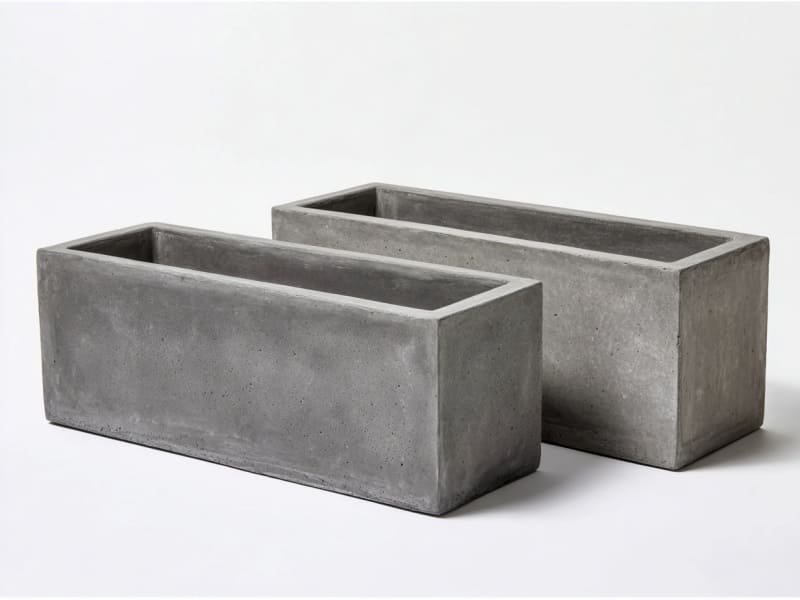
Project Customization
Many commercial landscape projects do not use standard planter sizes.
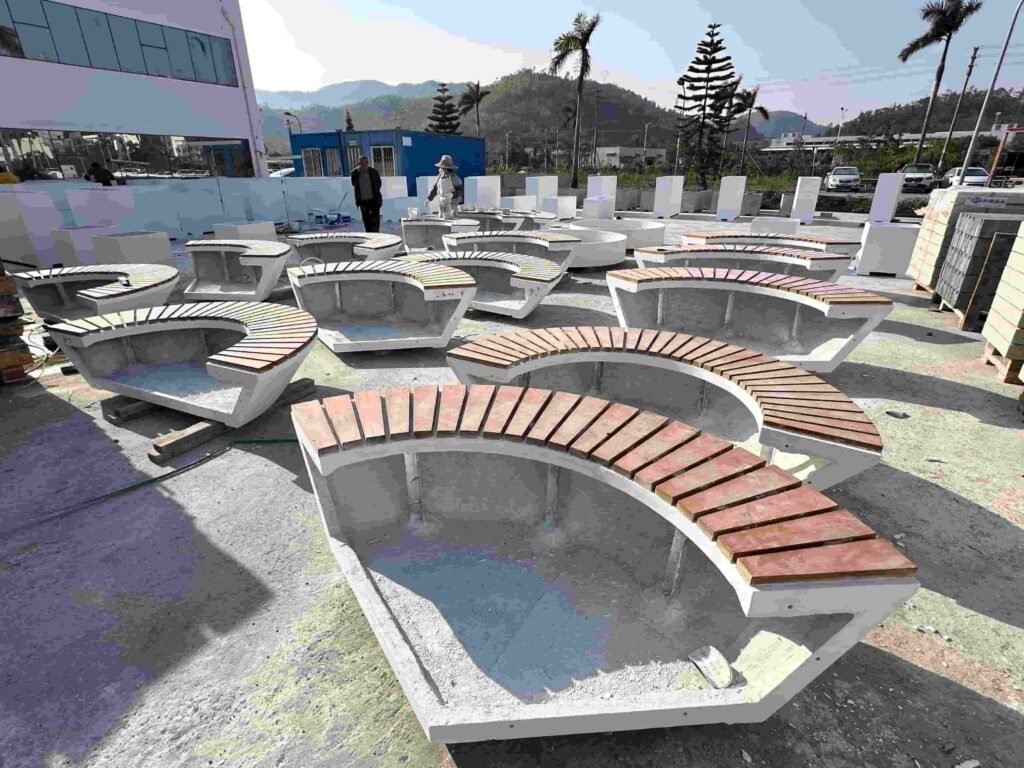
A project may require long rectangular planters, large round planters, custom modular planters, curved planters, or planter bench systems.
GRC is suitable for this type of custom work because production is mold-based.
However, customization also requires clear drawings, mold planning, sample approval, dimensional control, and proper packaging.
Where Are GRC Planter Boxes Commonly Used?
GRC planter boxes are commonly used in projects where durability, weight control, appearance, and customization are important.
Typical applications include commercial landscapes, rooftop gardens, hotel entrances, public plazas, residential developments, shopping malls, and streetscape projects. These applications align closely with the buyer groups and project concerns defined in the uploaded customer positioning document, including landscape contractors, material subcontractors, developers, architects, landscape designers, and project procurement managers.
Commercial Plazas
In commercial plazas, planter boxes are often used to organize pedestrian space, define seating areas, guide traffic flow, and improve the visual quality of the environment.
GRC planter boxes work well in this setting because they can be made in larger formats with a clean architectural appearance.
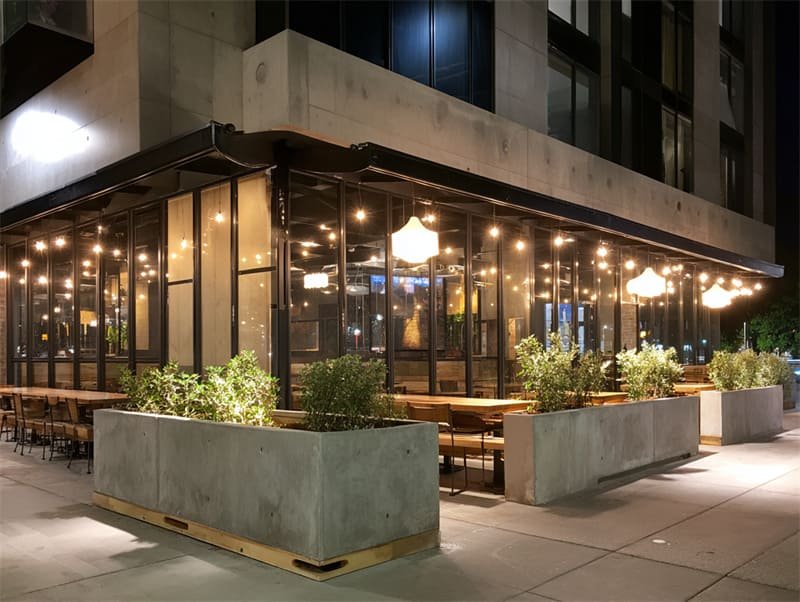
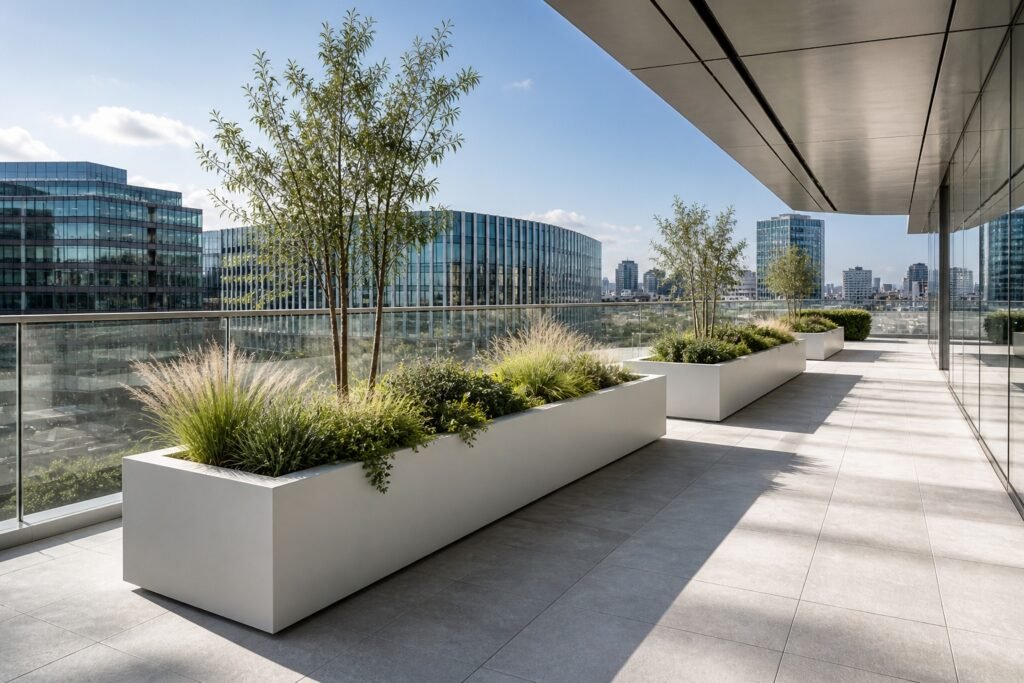
Rooftop Gardens
Rooftop projects require careful weight and drainage planning.
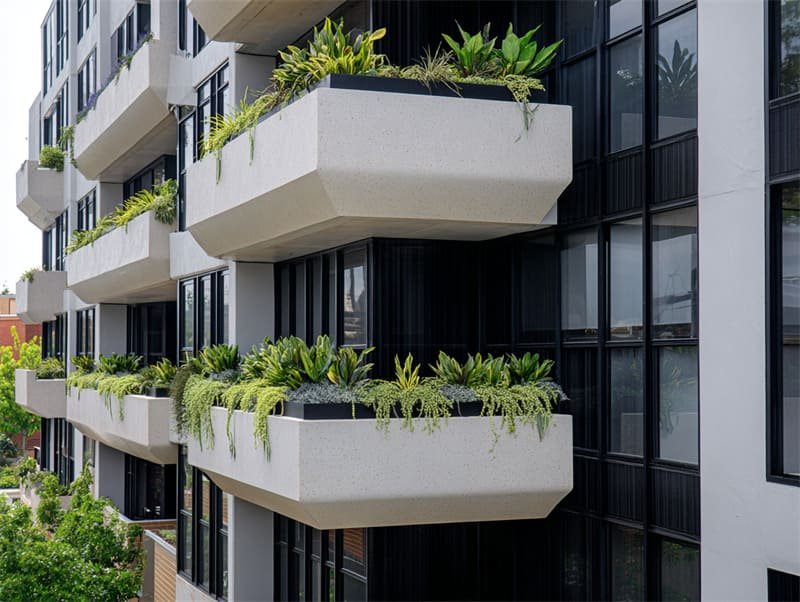
A GRC planter box may be a practical option when the project needs the appearance of concrete but wants to reduce the weight of the planter body.
That said, the total load should always be reviewed by the project engineer. This includes the planter, soil, water, plants, drainage layers, and any internal structure.
Hotel Entrances and Resorts
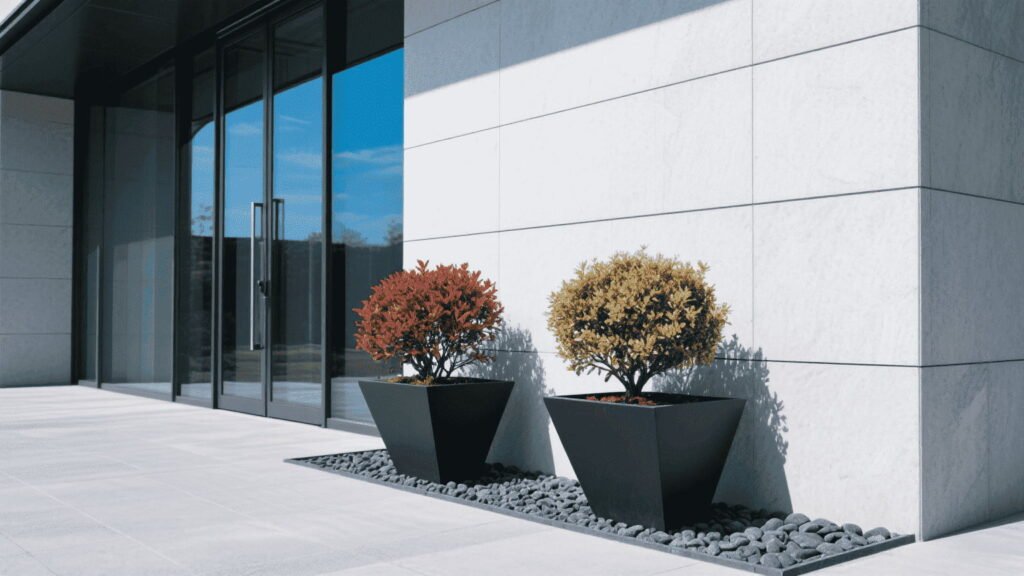
Hotels and resorts often use planters to create a stronger arrival experience.
Large GRC planters can help frame entrances, outdoor dining zones, courtyards, pool areas, and guest circulation paths.
For these projects, buyers should pay close attention to finish quality, edge details, color consistency, and surface texture.
Public Spaces and Streetscapes
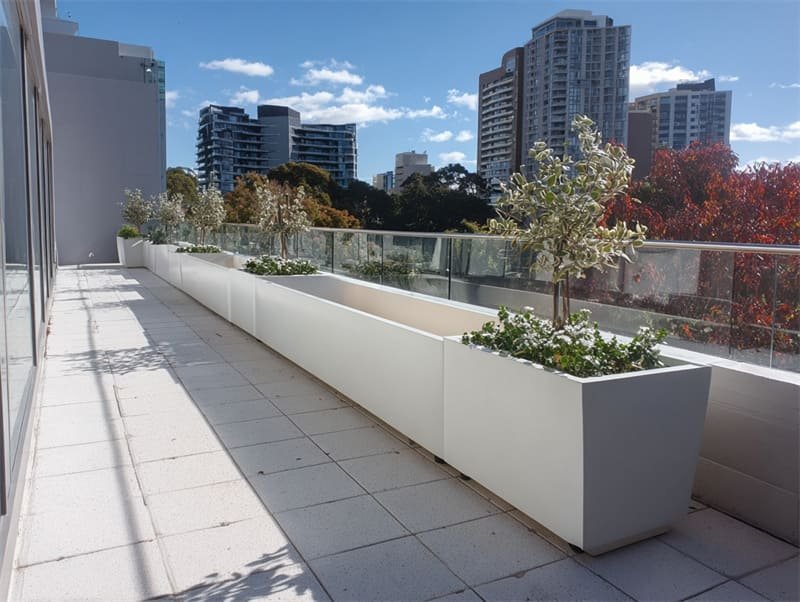
Public spaces require planter boxes that can handle long-term outdoor exposure and daily use.
GRC planter boxes can be used for urban greening, pedestrian separation, public seating integration, and streetscape improvement.
For these applications, buyers should ask about drainage design, repairability, cleaning, and packaging protection.
High-End Residential Developments
In residential developments, planter boxes are often used around entrances, terraces, balconies, garden paths, courtyards, and communal spaces.
The goal is not only to hold plants.
The planter should also support the overall architectural quality of the project.
Why Do Buyers Choose GRC Planter Boxes?
Most commercial buyers consider GRC planter boxes because they need to solve specific project problems.
They Need Large Planters Without Excessive Weight
Large concrete-style planters can become difficult to move, lift, and install.
GRC can help reduce the product body weight while keeping a solid architectural look.
This can be especially useful for rooftop projects, high-rise developments, and sites with limited access.
They Need Custom Sizes
Commercial projects often require planters that match the design drawings.
Standard sizes may not fit the site layout.
GRC allows the manufacturer to produce custom dimensions, shapes, edge profiles, and drainage details based on project requirements.
They Need Outdoor Durability
Outdoor planters face sunlight, rain, temperature changes, irrigation, cleaning, and daily wear.
GRC is widely used for architectural and construction applications, and its properties make it suitable for many exterior design elements when properly manufactured and maintained.
They Need Consistent Appearance
For large projects, one or two attractive planters are not enough.
The buyer may need 50, 100, or 300 pieces with consistent color, texture, and dimensions.
This requires controlled production, sample approval, and batch management.
What Should Buyers Check Before Ordering?
A GRC planter box is a custom building product, not just a decorative item.
Before placing an order, buyers should confirm several key details.
Dimensions
Provide clear length, width, height, wall thickness, and shape requirements.
If possible, send drawings rather than only photos.
Quantity
Quantity affects mold cost, unit price, lead time, and packaging design.
A custom mold for a small order is very different from a mold used for a large commercial project.
Finish
Confirm the required color, texture, and surface treatment.
For important projects, physical samples are highly recommended.
Photos are useful, but lighting and screen differences can affect color judgment.
Drainage
Drainage should be confirmed before production.
Buyers should specify the number, size, and position of drainage holes.
For rooftop or podium projects, drainage details may need to coordinate with waterproofing and landscape systems.
Weight
Ask for the estimated empty planter weight.
For rooftop projects, also calculate the total installed load with soil, water, planting, and drainage layers.
Packaging
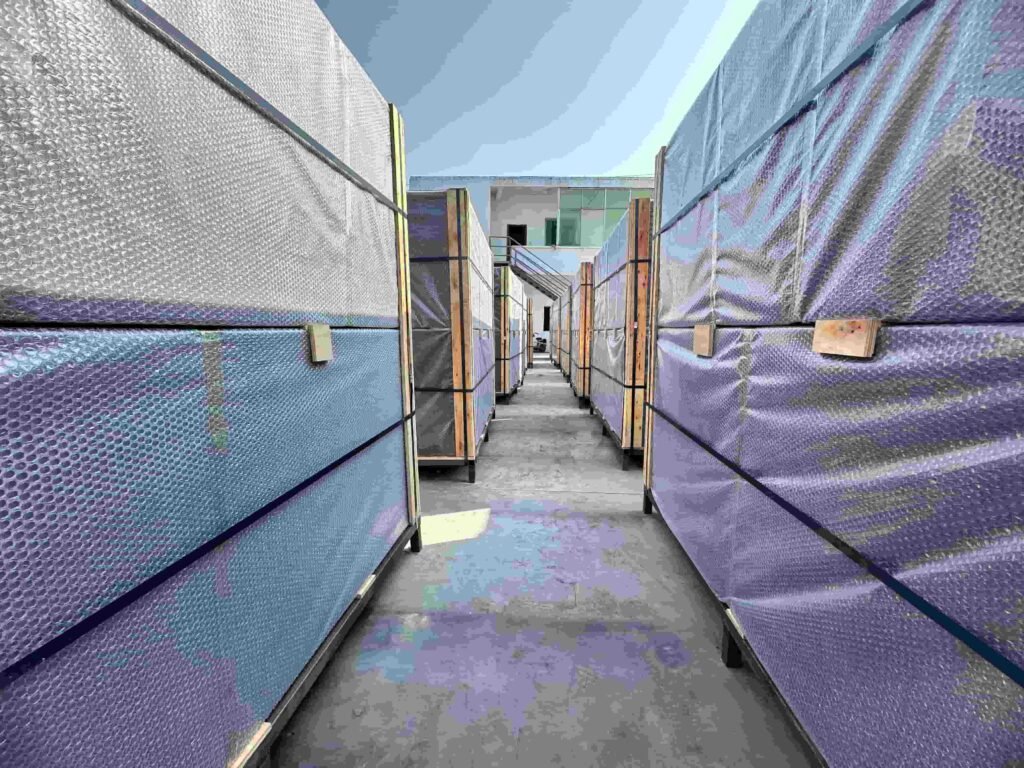
Export packaging is critical for GRC planter boxes.
Large planters may pass through factory handling, container loading, ocean freight, port unloading, local transportation, and site handling before final installation.
Buyers should request packing photos before shipment.
Lead Time
Custom GRC planter boxes require drawing review, mold production, sample approval, production, curing, inspection, and packaging.
Buyers should allow enough time for each stage.
Rushed production may increase the risk of errors.
Is a GRC Planter Box Always the Best Choice?
Not always.
GRC is a strong option for commercial and architectural landscape projects, but the best material depends on the project requirements.
A small residential garden may not need custom GRC planters.
A temporary event installation may be better served by lightweight plastic or fiberglass products.
A project that needs a warm natural finish may choose wood, although maintenance should be considered.
A project that needs a very sharp metal look may choose aluminum or steel.
GRC becomes more valuable when the project requires a concrete-like architectural appearance, custom sizing, outdoor durability, reduced weight, and consistent project-level production.
GRC Planter Box vs. Other Planter Materials
GRC vs. Traditional Concrete
Traditional concrete planters offer a solid appearance but can be very heavy.
GRC may be a better choice when the project needs large planters with reduced weight and custom shapes.
GRC vs. Metal
Metal planters can create a clean modern look.
However, buyers may need to consider corrosion, dents, coating damage, and heat absorption depending on the metal type and project environment.
GRC may be more suitable when the design calls for a mineral, stone-like, or concrete-based appearance.
GRC vs. Wood
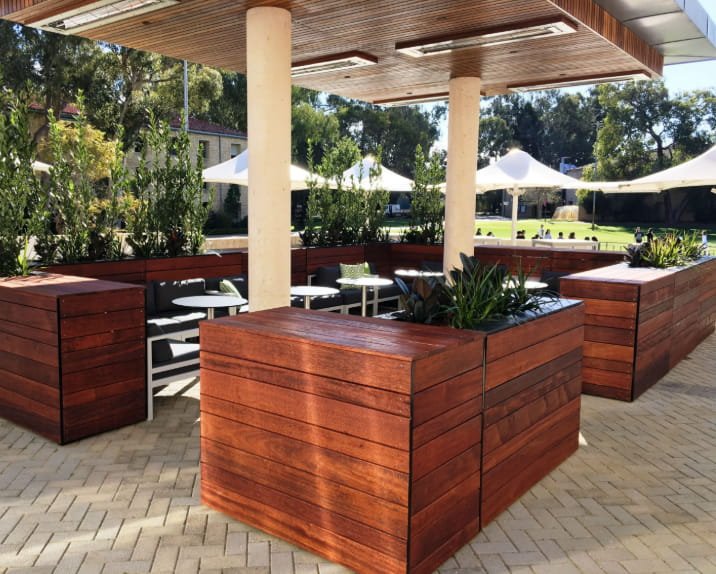
Wood planters provide warmth and natural texture.
However, outdoor wood may require more maintenance over time.
GRC may be a better option for long-term commercial landscapes where durability and lower maintenance are priorities.
GRC vs. Fiberglass
Fiberglass planters are lightweight and flexible in shape.
However, some architects and developers prefer GRC because it provides a more solid architectural surface and a stronger concrete-like visual effect.
Common Questions About GRC Planter Boxes
Is a GRC Planter Box Heavy?
A GRC planter box is usually lighter than a traditional thick concrete planter of similar size.
However, it is not weightless.
The final weight depends on size, wall thickness, shape, reinforcement, and finish.
Buyers should always request estimated unit weight before confirming the order.
Can GRC Planters Be Used Outdoors?
Yes.
GRC planter boxes can be used outdoors when the material, curing, surface finish, drainage, and production quality are properly controlled.
For long-term outdoor use, buyers should also confirm cleaning and maintenance recommendations.
Can GRC Planter Boxes Be Customized?
Yes.
GRC planter boxes can be customized in size, shape, color, finish, drainage design, and sometimes integrated functions such as seating or divider systems.
Custom production should always be supported by drawings and sample approval.
Do GRC Planters Need Waterproofing?
It depends on the project design.
Some projects may require internal waterproofing treatment, especially when the planter is used in sensitive locations such as rooftops, terraces, or areas above occupied spaces.
Buyers should discuss this with the supplier, landscape contractor, and waterproofing consultant.
Do GRC Planters Need Drainage Holes?
Most outdoor planter applications require drainage.
The exact drainage design depends on the planting system, soil type, irrigation plan, installation location, and project requirements.
Drainage should be confirmed before production, not after delivery.
Conclusion
A GRC planter box is not just a decorative container; it is a project component that should be evaluated by weight, finish, drainage, installation, shipping safety, and long-term outdoor performance. In commercial landscape projects, the best results usually come from early coordination between the buyer, designer, contractor, and manufacturer.
Conshell is a custom GRC planter box manufacturer providing lightweight, durable, and project-specific planter solutions for commercial landscapes, rooftop gardens, hotel entrances, public plazas, and high-end residential developments. We support custom sizes, shapes, colors, finishes, drainage details, and export packaging based on project requirements. Our goal is to help architects, contractors, developers, and procurement teams turn design concepts into reliable, buildable planter systems.
If you are planning a GRC planter project, send us your drawings, dimensions, quantity, finish requirements, and project location. Our team will review your requirements and provide a suitable solution for your project.
In commercial landscape projects, the right planter box can improve more than the planting area.
It can strengthen the visual identity of the entire space.
That is the real value of a GRC planter box.
It combines architectural appearance, custom production, outdoor performance, and practical project execution in one material solution.