

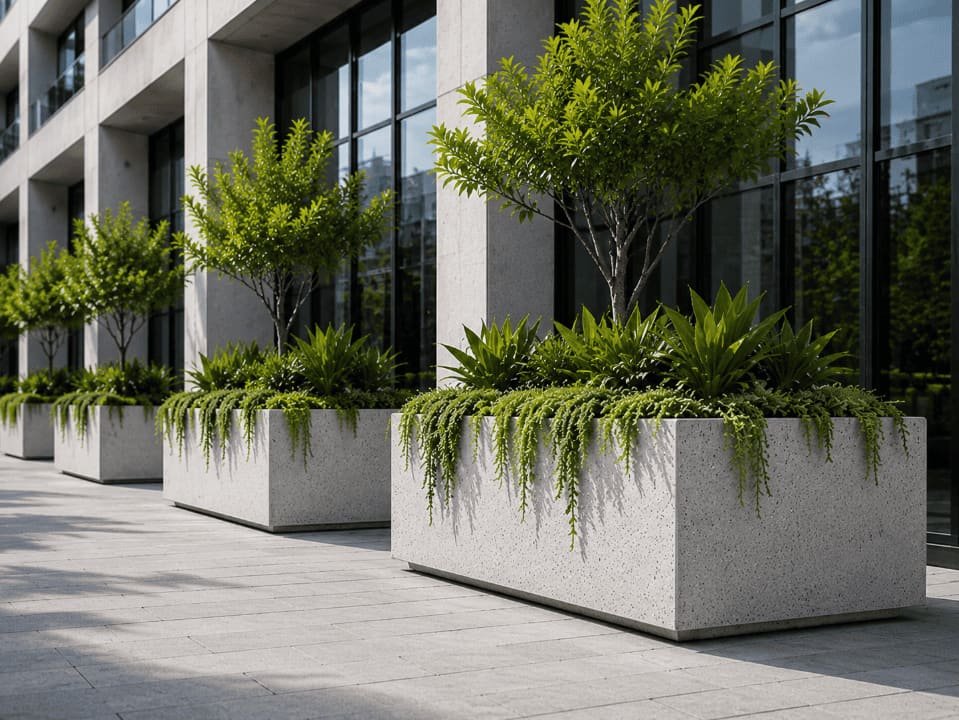
Weight is one of the first questions buyers ask when sourcing GRC planter boxes.
That makes sense.
For commercial landscape projects, planter weight affects shipping cost, lifting equipment, rooftop loading, installation planning, and even whether the original design can be built as specified.
GRC planter boxes are usually lighter than traditional thick concrete planters, but their exact weight depends on size, wall thickness, shape, reinforcement design, finish, and drainage details. For large commercial projects, buyers should always request the estimated empty weight and review the total installed load with soil, water, plants, and drainage layers.
Below, we will explain why GRC planters are lighter than many traditional concrete planters, what factors affect their final weight, how buyers should calculate project load, and what to confirm before placing a custom order.
What Makes GRC Planter Boxes Lighter?
GRC stands for glass reinforced concrete. In North America, many buyers also use the term GFRC, which means glass fiber reinforced concrete.
GRC is a cement-based composite material made with cement, fine aggregate, water, admixtures, and alkali-resistant glass fibers.
The important point is not only the material name.
The important point is the structure.
Traditional concrete planters often rely on thicker sections to achieve strength and stability. GRC uses glass fiber reinforcement within the cement-based matrix, which allows many products to be produced in thinner wall sections.
This is why GRC planter boxes can often provide a solid concrete-like appearance without the same body weight as traditional cast concrete planters.
For buyers, this can be a major advantage in rooftop gardens, terraces, balconies, podium landscapes, hotel entrances, public plazas, and projects with limited site access.
How Heavy Are GRC Planter Boxes?
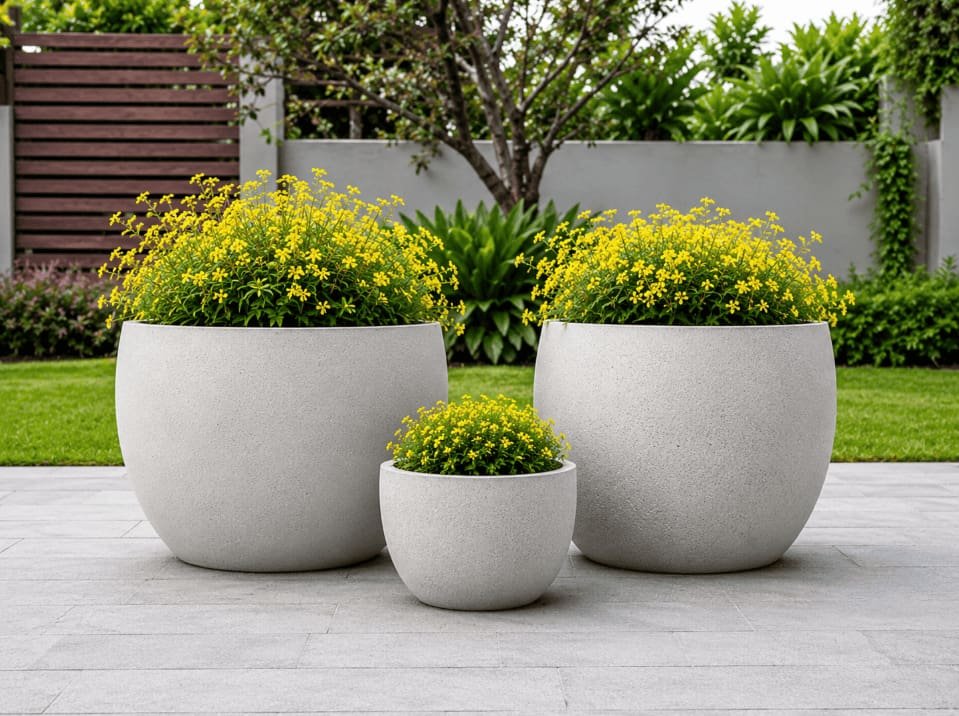
There is no single standard weight for all GRC planter boxes.
A small GRC planter may be light enough for easy handling.
A large commercial planter may still require a forklift, pallet jack, crane, or other lifting equipment.
The weight depends mainly on the planter size and wall thickness.
For example, a long rectangular planter will weigh more than a small square planter. A deep planter will weigh more than a shallow planter. A thicker wall section will add weight. A complex shape may also require additional reinforcement or support details.
This is why buyers should avoid relying on general product descriptions such as “lightweight.”
Lightweight compared with what?
Lightweight for hand-carrying?
Lightweight for rooftop installation?
Lightweight compared with traditional concrete?
Those are very different questions.
A professional supplier should be able to provide an estimated empty weight based on the confirmed drawings.
Empty Weight vs. Installed Weight
One of the most common mistakes in planter projects is looking only at the empty product weight.
The empty weight is only the weight of the planter itself.
The installed weight is much higher.
That is because a finished planter may include:
- Soil.
- Plants.
- Water.
- Drainage layers.
- Internal liners.
- Irrigation components.
- Base supports.
- Decorative stones or mulch.
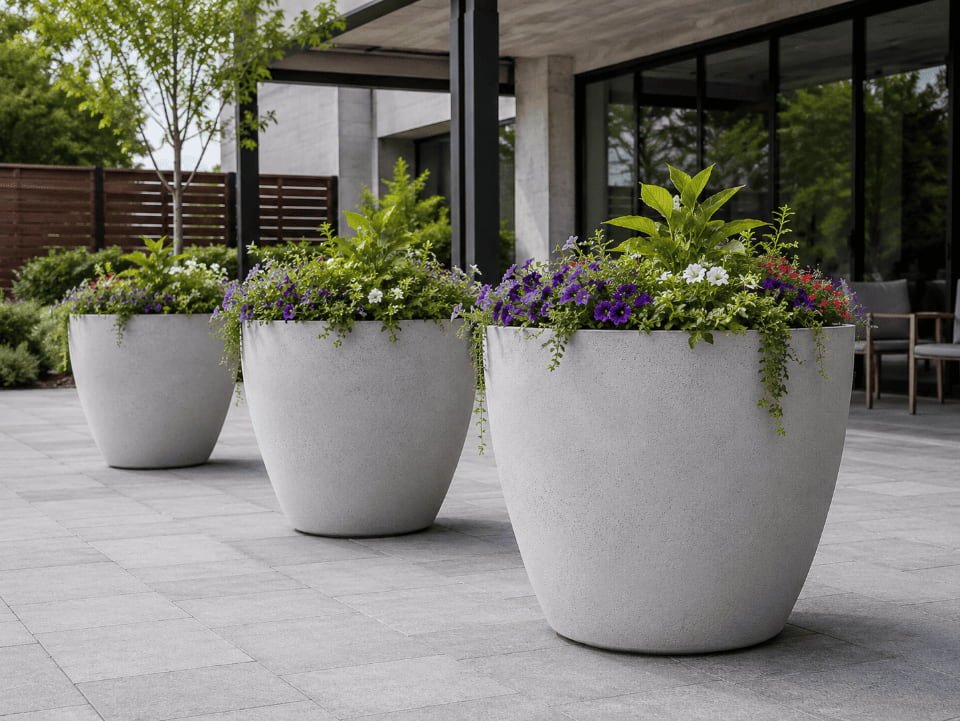
For rooftop gardens and elevated structures, the installed weight is the number that really matters.
A planter may look acceptable when empty, but once it is filled with wet soil and planting materials, the total load can increase significantly.
This is why project engineers usually need more than the planter body weight. They need to evaluate the full system load.
As a supplier, I would always recommend confirming both numbers early:
Estimated empty weight.
Estimated installed load range.
The supplier can provide the product weight. The landscape designer, contractor, or project engineer should confirm the full installed load based on the planting system.
What Factors Affect the Weight of a GRC Planter Box?
Several details influence the final weight of a custom GRC planter box.
Size
Size is the most obvious factor.
A larger planter uses more material. It may also need stronger packaging and more careful handling.
Length, width, height, and depth all matter.
For long trough planters, the wall area increases quickly. For tall planters, both the wall area and structural requirements may increase.
When sending an inquiry, buyers should provide accurate dimensions instead of only reference photos.
Wall Thickness
Wall thickness has a direct impact on weight.
A thicker wall usually means a heavier planter. A thinner wall can reduce weight, but it must still meet strength, handling, and durability requirements.
There is no one-size-fits-all wall thickness.
A small decorative planter and a 2-meter commercial landscape planter should not be designed the same way.
The correct wall thickness depends on size, shape, expected load, transport method, and installation environment.
Shape
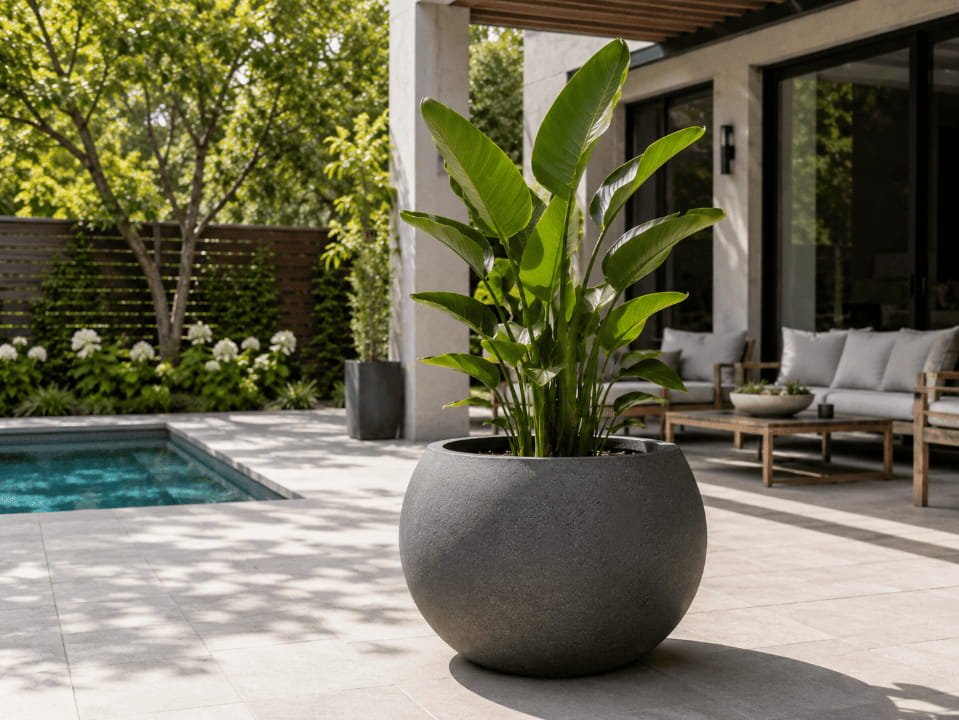
Shape also affects weight.
A simple rectangular planter is usually easier to design and produce. A round, curved, L-shaped, or irregular planter may require more careful mold planning and reinforcement details.
Complex shapes may also reduce packing efficiency, which can affect shipping cost even if the product body weight is reasonable.
Finish
Some finishes may add a small amount of weight.
For example, special coatings, surface treatments, or texture layers may slightly affect the final product weight.
In most projects, finish is not the biggest weight factor.
But it still belongs in the full specification because finish affects cost, production time, appearance, maintenance, and sometimes packaging protection.
Drainage and Base Design
Drainage details can influence weight and installation planning.
Drainage holes, raised feet, base gaps, pipe connections, and internal waterproofing details may all change the final product design.
For rooftop projects, drainage should be coordinated with waterproofing and planting systems.
A lightweight planter with poor drainage can still create long-term project problems.
Reinforcement and Embedded Parts
Some large planters may require additional reinforcement, lifting points, embedded parts, or assembly details.
These components can add weight, but they may also improve handling and installation.
For very large custom planters, the goal is not simply to make the product as light as possible.
The goal is to make it light enough, strong enough, and practical enough for the project.
Why Weight Matters for Commercial Projects
Planter weight affects more than delivery.
It affects the whole project workflow.
Rooftop Loading
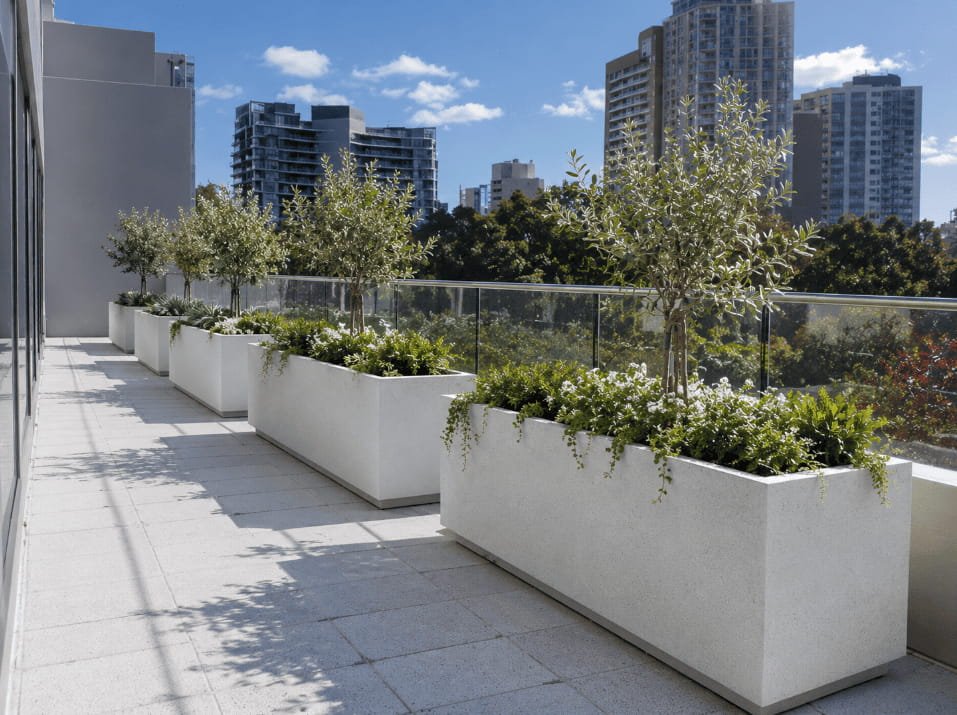
Rooftop gardens are one of the most weight-sensitive applications.
The planter body, soil, water, plants, drainage layer, irrigation system, and maintenance load all need to be considered.
For rooftop projects, buyers should ask the supplier for the estimated empty weight, then work with the project engineer to confirm total loading.
This step should happen before production, not after delivery.
Transportation
Heavy planters can increase freight cost and handling difficulty.
For export orders, both weight and volume matter.
A GRC planter may be lighter than a traditional concrete planter, but it still takes up container space.
A good supplier should review both product weight and packing dimensions during quotation.
Installation
Installation equipment depends on product weight and site conditions.
Some projects may use forklifts.
Some may need cranes.
Some may require pallet jacks or manual positioning after unloading.
If the site has narrow access, elevators, finished paving, or limited crane reach, the supplier should know this before production.
Sometimes the planter design can be adjusted to make installation easier.
For example, a very large planter may be produced in sections for on-site assembly.
Structural Coordination
In commercial projects, planters often interact with other systems.
They may sit on waterproofing layers, paving systems, structural slabs, podium decks, or rooftop membranes.
If the product is too heavy, the project team may need to change the design, adjust the location, or choose another material.
This is why planter weight should be reviewed during the design or procurement stage.
Are GRC Planters Light Enough for Rooftop Gardens?
GRC planters are often a strong option for rooftop gardens because they can reduce the planter body weight compared with traditional thick concrete planters.
However, buyers should be careful with the word “lightweight.”
For rooftop projects, the key question is not whether the planter is light.
The key question is whether the total installed system is acceptable for the structure.
This includes wet soil load, plant load, drainage layer, water retention, and maintenance access.
A GRC planter may help reduce one part of the load, but it does not remove the need for engineering review.
For serious rooftop projects, ask for:
Planter empty weight.
Recommended wall thickness.
Drainage design.
Packing dimensions.
Installation method.
Any sectional design option.
This information helps the project team make better decisions.
Are Large GRC Planters Easy to Move?
Large GRC planters are easier to handle than many thick concrete alternatives, but they are still construction products.
They should be moved with proper equipment and support.
The edges, corners, rims, and finished surfaces need protection during unloading and installation.
Buyers should not assume that a lighter planter can be handled casually.
For large export orders, it is helpful to request:
- Forklift access points.
- Crate dimensions.
- Unloading instructions.
- Lifting recommendations.
- Packing photos.
- Loading photos.
- Repair kit details.
These practical details can reduce damage risk and make installation smoother.
How Buyers Should Ask for Weight Information
A clear inquiry helps the supplier provide useful weight information.
When asking about GRC planter box weight, include the following details:
- Planter length, width, and height.
- Wall thickness if specified.
- Quantity.
- Shape.
- Finish requirement.
- Drainage details.
- Installation location.
- Project country or city.
- Rooftop or ground-level use.
- Expected lifting method if known.
If drawings are available, send them with the inquiry.
A supplier can give a rough estimate from basic dimensions, but confirmed drawings are better for accurate weight calculation.
For custom projects, the final weight should be confirmed after the design and wall thickness are approved.
Common Mistakes Buyers Should Avoid
Asking Only “How Heavy Is It?”
This question is too general.
A better question is:
“What is the estimated empty weight for this exact size, wall thickness, and finish?”
That gives the supplier enough context to provide a useful answer.
Ignoring Soil and Water Load
The planter body is only one part of the total load.
For rooftop and terrace projects, wet soil and water can be more important than the planter itself.
The project team should review the full installed load.
Comparing GRC and Concrete Without Dimensions
GRC is usually lighter than traditional thick concrete, but the comparison only makes sense when size and design are similar.
A large GRC planter may still weigh more than a small concrete planter.
Always compare products with the same dimensions and application.
Forgetting About Shipping Volume
A product can be lighter but still expensive to ship if it occupies too much container space.
For export projects, ask for both product weight and packing volume.
Choosing the Thinnest Wall Possible
Reducing weight is useful, but the planter still needs to perform.
Too thin may create problems during handling, transport, installation, or long-term use.
The goal should be balanced design, not the lowest possible weight.
Final Recommendation
GRC planter boxes are usually lighter than traditional thick concrete planters, which makes them useful for commercial landscapes, rooftop gardens, terraces, hotel entrances, public plazas, and export projects.
However, the exact weight depends on size, wall thickness, shape, reinforcement, finish, and drainage design.
For buyers, the most important step is to request the estimated empty weight early and review the total installed load before production.
This is especially important for rooftop gardens, podium landscapes, balconies, and any project with lifting or structural limitations.
Conclusion
In commercial planter projects, weight should be treated as a design and installation factor, not just a product specification. From a supplier’s perspective, the best result usually comes from balancing lighter construction, sufficient strength, proper drainage, safe packaging, and realistic site handling.
Conshell is a custom GRC planter box manufacturer providing lightweight, durable, and project-specific planter solutions for commercial landscapes, rooftop gardens, hotel entrances, public plazas, streetscapes, and high-end residential developments. We support custom sizes, shapes, colors, surface finishes, drainage details, sectional designs, and export packaging based on project requirements.
If you are planning a GRC planter project, send us your drawings, dimensions, quantity, finish requirements, drainage details, project location, and installation conditions. Our team will review your requirements and help recommend a suitable planter solution for your project.