


Learn how custom GRC planters are manufactured, from mold design and AR glass fiber selection to curing, quality control, export packing, and supplier checklist.
Executive Summary
Custom GRC planters are usually manufactured through a controlled sequence: design review, shop drawings, mold production, batching of cement-based materials with alkali-resistant glass fiber, forming by spray-up or premix, curing, finishing, inspection, and export packing. That buyer-first, short-paragraph structure also follows the uploaded writing guideline you provided.
For buyers, the biggest risk is rarely the material name alone. It is usually the process discipline behind the product: whether the supplier uses compliant AR glass fiber, matches the right forming method to the planter shape, controls curing and demolding, checks fiber content and dimensions, and packs the finished units in a way that survives export handling.
If you are buying custom GRC planters for a hotel, plaza, rooftop, mall, or residential development, you are not really buying “a pot.”
You are buying a small precast project.
That matters because a custom planter has to match drawings, hold its shape, drain correctly, survive lifting, and arrive with the finish intact.

Custom GRC planters are manufactured by combining cement, fine aggregate, water, admixtures, and alkali-resistant glass fibers, then forming the material in a custom mold by spray-up or premix methods, followed by curing, finishing, inspection, and export packing. The exact route depends on planter size, geometry, required finish, quantity, and project performance expectations.
Below, I’ll walk through the manufacturing process the way an experienced buyer should review it: material basics, process options, mold and casting steps, curing, finishing, quality control, packaging, and the questions you should ask before you place a purchase order.
GRC material basics and standards
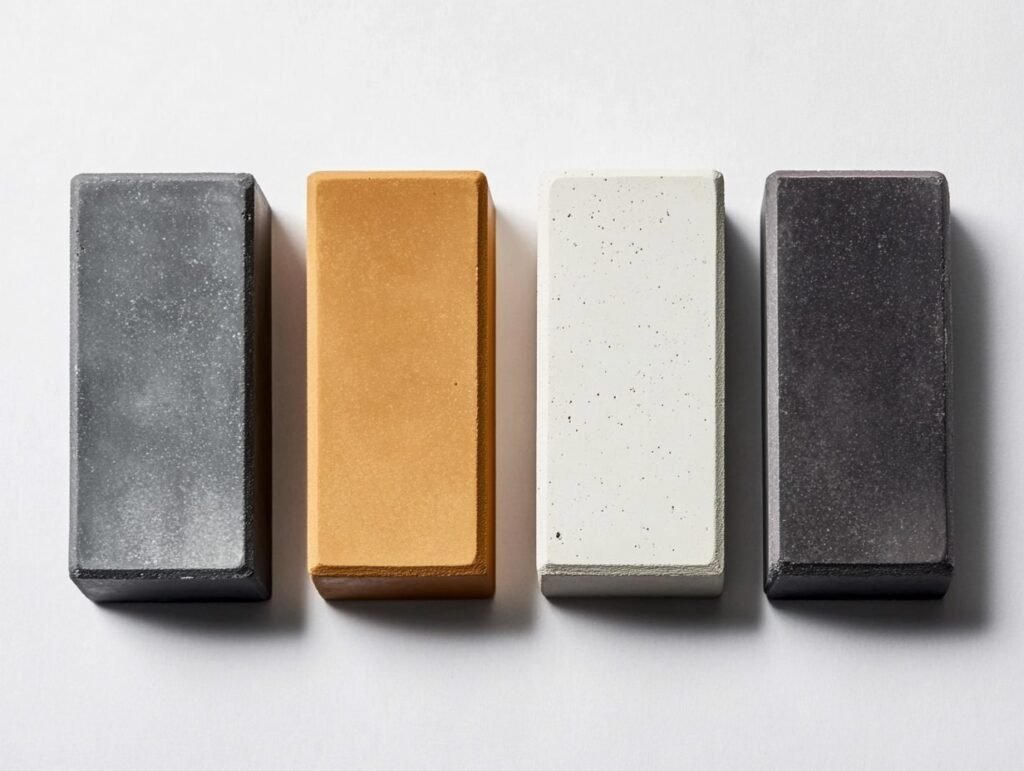
GRC stands for glass reinforced concrete. In North America, you will also see GFRC, or glass fiber reinforced concrete. The Architectural Precast Association describes GFRC as a composite made with cement, fine aggregate, admixtures, water, and alkali-resistant glass fiber reinforcement. The same APA page also notes that GFRC products are lighter and thinner than many conventional architectural precast alternatives and can be cast into nearly unlimited shapes, colors, and textures.
For manufacturers, the glass fiber itself is not a minor detail.
ASTM C1666 covers alkali-resistant glass fiber for GFRC and related cement-based products, and the standard requires a minimum zirconia content of 16% by mass. That requirement matters because ordinary glass fiber does not perform the same way in the alkaline cement environment.
From a buyer’s side, it also helps to know which standards often sit behind a serious GFRC production line. ASTM C27.40 lists active GFRC-related standards including C1666 for AR glass fiber, C947 for flexural properties, C1229 for glass fiber content, and C1930 for slurry flow rate in fresh spray-up GFRC.
Industry guidance is also layered.
APA frames spray-up and premix as the two basic GFRC fabrication processes. ACI PRC-549.3:2022, which focuses on AR GFRC premix, specifically covers materials, mixture proportions, properties, cast premix, spray premix, press-molded premix, and quality-control considerations. The GRCA publication index likewise shows long-standing guidance on manufacturing, curing, testing, tolerances, and quality.
The main manufacturing methods buyers should understand
APA keeps the process families simple: spray-up and premix. ACI then breaks premix down further into cast premix, spray premix, and press-molded premix. In actual custom workshop communication, you may also hear “hand lay-up,” which is usually a shop-floor term for manual build-up steps rather than a separate major standards category.
| Method | Basic process | Main advantages | Main limitations | Typical uses |
| Spray-up | Slurry is sprayed into the mold while continuous glass roving is chopped at the nozzle and deposited into the wet matrix | High thin-wall efficiency, good fiber distribution for lightweight shells, strong fit for custom large pieces | Needs trained operators, equipment setup matters, process control is critical | Thin-wall architectural shapes, large custom elements, planter shells where weight and shape matter |
| Premix cast | Chopped AR glass fiber is mixed into the slurry first, then poured or pumped into the mold, usually with vibration or self-compaction | Easier mold filling for complex cavities, lower equipment cost, easier repeatability for smaller or moderate-size pieces | Usually lower strength than spray-up because of shorter fibers and different orientation | Small to medium custom planters, deeper shapes, more complex mold cavities |
| Hand lay-up | Manual build-up of face coat and reinforcement layers by hand, often used as a custom-shop technique | Flexible for one-off work, sculptural pieces, local repairs or special detailing | Labor-intensive, consistency depends heavily on operator skill | Prototypes, one-offs, sculptural custom pieces |
| Press-molded premix | Premix material is formed under pressure in matched molds | Good repeatability and controlled geometry for repeated parts | Tooling and setup can be more demanding; less common for very large bespoke planters | Repetitive smaller elements and standardized shapes |
The table above combines APA’s core process split, ACI’s premix process categories, and California DSA guidance noting that premix GFRC may be cast, sprayed, press molded, or extruded, while spray-up remains the traditional and most common route for many GFRC panels.
For custom planter work, I usually tell buyers to focus on one question first:
Which process gives this exact geometry the best balance of finish quality, weight, and repeatability?
That question is more useful than asking which method is “best” in general.
From mold design to curing
Mold design and production
The mold is where custom GRC manufacturing really begins.
APA’s plant-tour guidance highlights mold building, finishing methods, raw materials, and plant quality control as core parts of precast manufacturing education. In practical terms, the mold controls the planter’s geometry, corner quality, surface texture, demolding direction, and how well repeated units match each other.
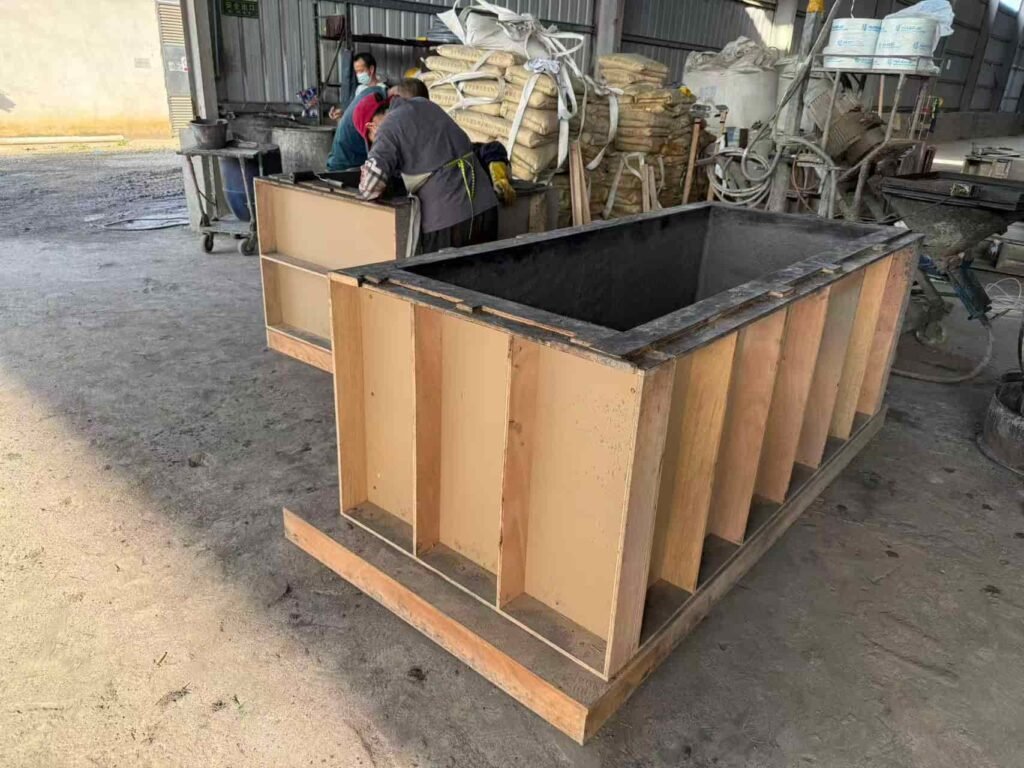
For buyers, this means the supplier should review more than overall dimensions.
They should also confirm wall thickness, rim profile, drain hole locations, embedded inserts, lifting points, sectional joints, and whether the piece can demold without stressing corners or returns. California DSA guidance for GFRC systems also emphasizes that design drawings, dimensions, support conditions, and supporting calculations belong in the submittal package.
Approved design
Shop drawings
Mold engineering
Drainage and embed review
Mold fabrication
Sample or first article
Mass production

Batching, mixing, and fiber reinforcement
Once the mold is ready, the factory moves to batching.
At that stage, the critical variables are the cement-based matrix, admixtures, water control, and the glass fiber system. DSA’s GFRC guidance notes that mix composition, compaction, cement type, and the proportion, length, and orientation of glass fibers may all be varied to produce a specific product. It also notes that lower fiber content reduces early ultimate strength, while higher fiber content can create compaction and consolidation challenges.
Spray-up and premix do not handle fiber the same way.
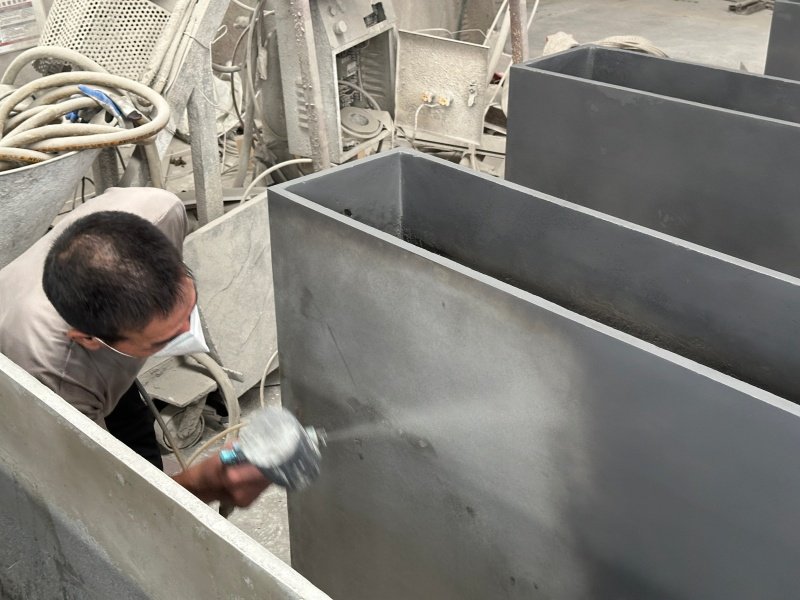
APA explains that in spray-up, the gun sprays the fluid concrete mixture while simultaneously cutting and spraying glass fibers into the mold. In premix, the glass fibers are mixed into the concrete mixture first and then poured into the mold.
That difference is not trivial.
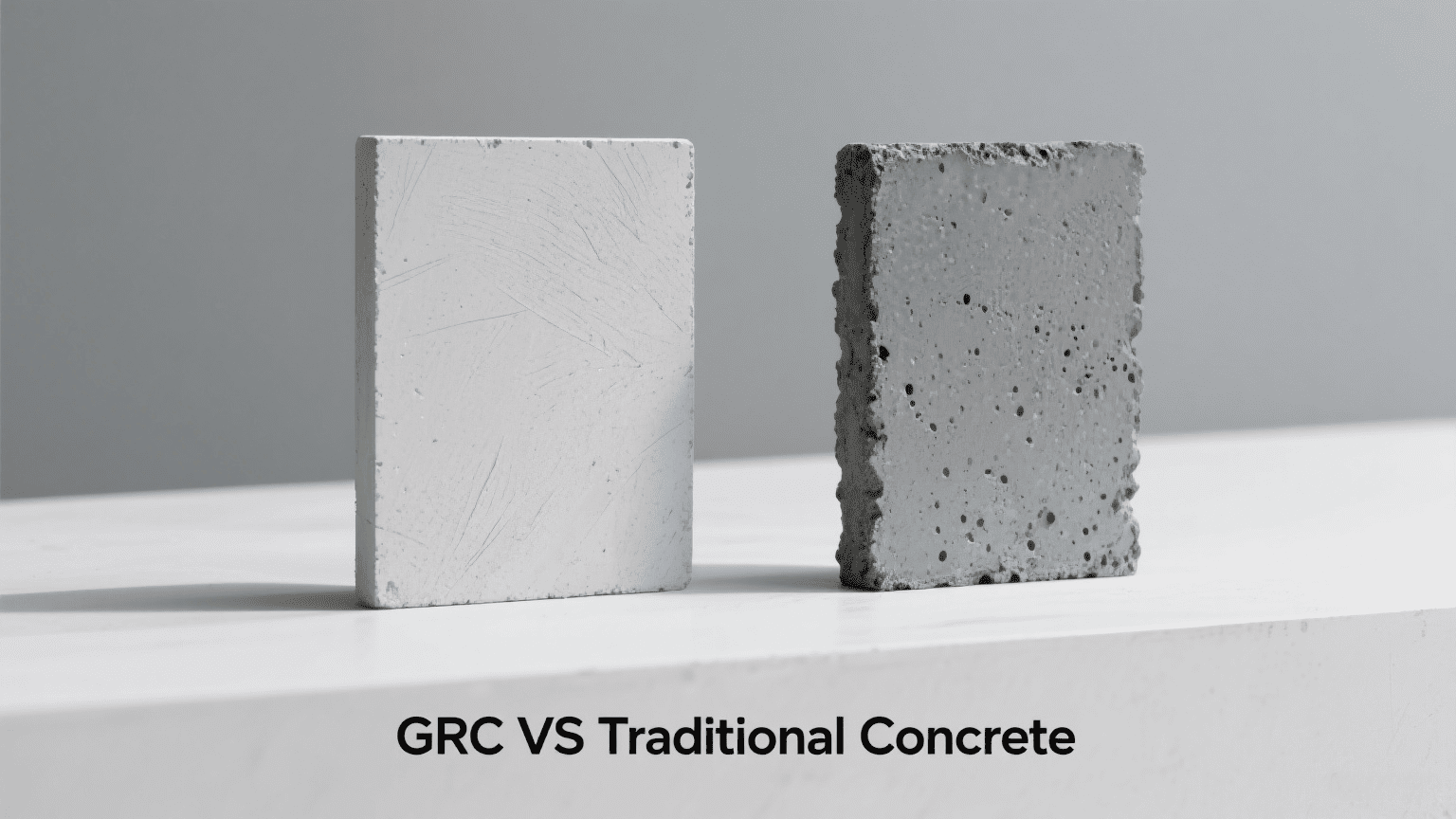
DSA states that spray-up GFRC panels typically contain about 5% AR glass fiber by total mix weight, with an absolute minimum of 4%, while premix GFRC must contain at least 3% AR glass fiber by total mix weight. DSA also notes that premix generally yields lower strength than spray-up because of shorter fibers and fiber orientation, even though premix equipment is usually less expensive.
Casting, spraying, compaction, and demolding
In spray-up production, the operator builds the section in layers.
The DSA guideline describes layers of roughly 1/8 in. to 1/4 in. thickness, compacted often by rolling. A GRCA-derived specification mirrored online similarly describes sprayed premix or spray application in layers, with rolling between passes and thickness checks during production.
In cast premix, the mixed material is poured or pumped into the mold and then compacted.
DSA describes premix slurry as usually being cast with vibration into a mold similar to precast concrete. The GRCA-derived mirror adds that the filling method should expel air and avoid planes of weakness, with compaction by internal vibration, external vibration, or self-compacting mix design.
Demolding is one of the highest-risk moments.
GRCA-derived guidance says filled molds should be stored on a level surface and supported so they do not bow or twist, and that they should not be moved until demolding. The same guidance stresses that components should not be demolded until they have gained enough strength to be handled without overstress.
Curing practices
A poor curing plan can ruin a good casting.
DSA states that GFRC curing may be achieved either by moisture curing or by using a thermoplastic copolymer admixture that retains moisture until the product is adequately cured. GRCA-derived specifications further describe controlled early curing, protection from rapid drying, and handling conditions that avoid bowing, twisting, and edge damage.
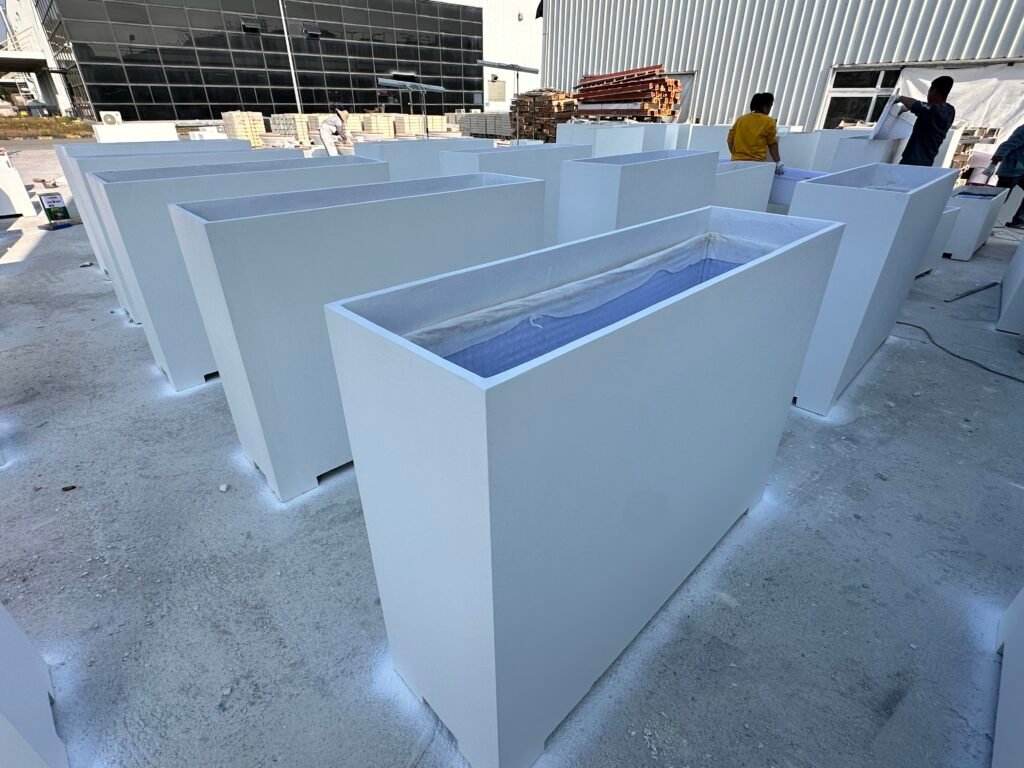
As a buyer, I would always ask one direct question here:
What is your curing method for this planter type, and how long do you hold the product before finishing, packing, and shipping?
That question often tells you a lot about whether the supplier is running a disciplined process or just trying to move product fast.
Finishing, QC, and common failure modes
Finishing is not only cosmetic.
APA’s color and texture guide shows that precast finishes can include acid-etched, sandblasted, exposed aggregate, and polished surfaces across a wide range of colors. APA also warns that small digital color swatches can vary from screen to screen and recommends early coordination with a certified plant for color and texture decisions.
Quality control should begin before the product cures.
ASTM C1930 says slurry flow rate testing is useful for fresh spray-up GFRC quality control because it helps confirm that the equipment is delivering the correct proportions for the composite. ASTM C1229 says wash-out testing of uncured GFRC sample panels is useful for verifying glass fiber content. ASTM C947 says flexural testing is useful for quality control, compliance, R&D, and product design.
For a custom planter order, the routine QC stack usually includes dimensional checks, wall-thickness checks, surface inspection, drainage-hole verification, insert location checks, and visual review of chips, cracks, and finish consistency.

If the project is technical, structural, or unusually exposed, coupon testing or flexural testing may also be appropriate. ASTM’s GFRC standards list makes clear that the standards ecosystem for these checks already exists.
In practice, the failure modes buyers most often need to screen for are predictable.
They include low fiber content, poor fiber dispersion, trapped air, weak corners from insufficient compaction, distortion from poor mold support, early demolding, color mismatch, and shipping damage at edges and rims. Those risks track directly back to the manufacturing variables described by DSA, ASTM, APA, and GRCA-derived guidance.
Export packaging, lead times, and the buyer checklist
Drainage and embedded parts should be finalized before the mold is locked.
That includes drain-hole quantity and location, overflow details, liner allowances, embedded inserts, and any lifting provision. DSA’s GFRC guidance also requires supporting documents, drawings, and corrosion protection details for frames, anchors, connectors, and inserts in panelized systems, which is a good reminder that embedded hardware should never be treated as an afterthought.
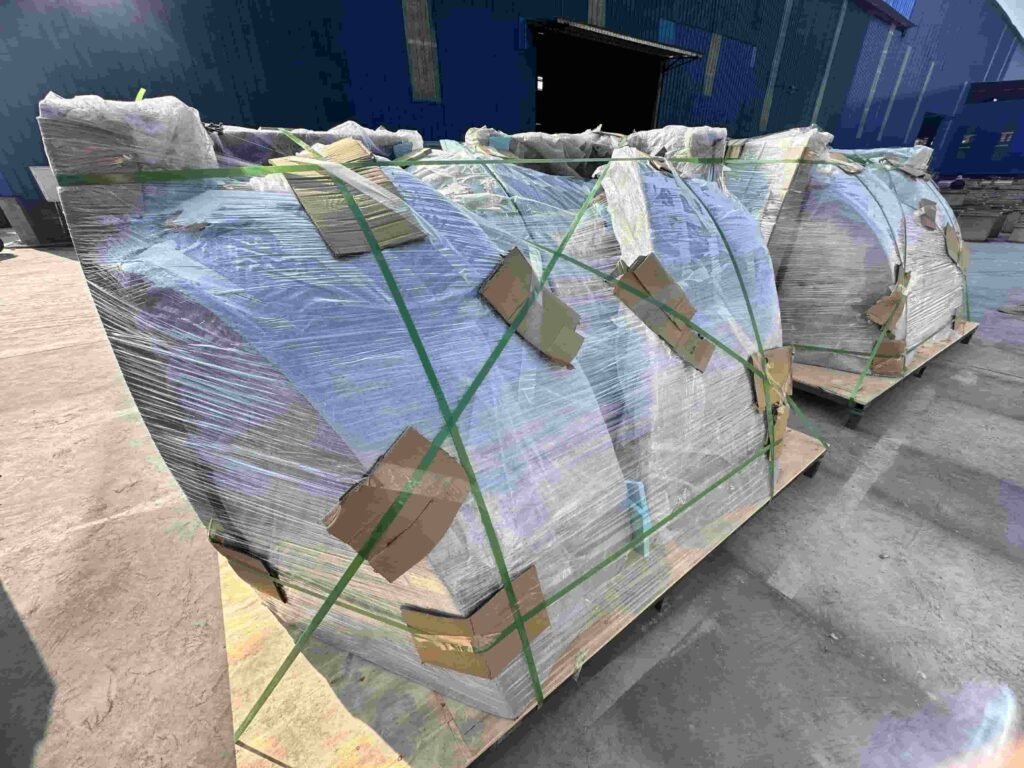
For export orders, packing is part of manufacturing.
If the supplier uses wood crates, APHIS states that regulated wood packaging material used to support, protect, or carry cargo in international trade must be treated and certified to ISPM 15. APHIS also explains that the official mark is part of how import authorities verify compliance.
Simple export crate sketch
┌───────────────────────────────┐
│ outer crate / ISPM 15 wood │
│ foam + corner guards │
│ ┌───────────────────────┐ │
│ │ GRC planter │ │
│ │ rim protected here │ │
│ └───────────────────────┘ │
│ blocked base + pallet skids │
└───────────────────────────────┘
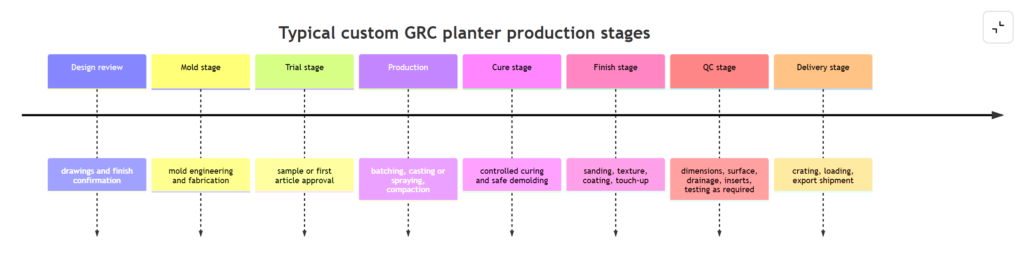
Lead time should be reviewed as a sequence, not a single number.
A realistic production schedule usually includes drawing approval, mold fabrication, sample or first-article approval, mass production, curing, finishing, QC, packing, and final loading. That sequence follows the manufacturing logic described by APA plant operations guidance, ACI’s manufacturing-process framework, and DSA’s submittal and fabrication requirements.
Design review drawings and finish confirmation Mold stage mold engineering and fabrication Trial stage sample or first article approval Production batching, casting or spraying, compaction Cure stage controlled curing and safe demolding Finish stage sanding, texture, coating, touch-up QC stage dimensions, surface, drainage, inserts, testing as required Delivery stage crating, loading, export shipment Typical custom GRC planter production stages.
| What buyers should request | Why it matters |
| Approved shop drawings with dimensions and drainage | Prevents mold mistakes and site-fit issues |
| Estimated empty weight per planter | Needed for handling, freight, and structure review |
| Manufacturing method for this order | Tells you whether the process fits the geometry |
| AR glass fiber specification or certificate | Confirms basic fiber compliance expectations |
| Curing method and hold time before packing | Screens for rushed production |
| Finish sample approval record | Reduces color and texture disputes |
| QC plan and any test records | Shows how the factory verifies consistency |
| Drainage and embedded-part details | Prevents late rework and installation delays |
| Packing method and crate drawings | Important for international handling |
| Actual packing photos before shipment | Helps confirm the factory packed what it promised |
The checklist above is based on the process risks discussed throughout this article: process selection, fiber compliance, curing discipline, QC, and export packaging.
Conclusion
From a seller’s perspective, the best custom GRC planter factories are not the ones that simply say “yes” to every drawing. They are the ones that can explain why a certain process, mold strategy, curing plan, and packing method fit your project better than the alternatives.
Conshell is a custom GRC planter manufacturer focused on commercial landscape projects, rooftop gardens, hospitality projects, public spaces, and high-end residential developments. We support custom sizes, shapes, finishes, drainage details, and export packaging based on project requirements. If you are sourcing custom GRC planters, send us your drawings, dimensions, quantity, finish targets, and destination port, and we can review the project with you from manufacturing feasibility to delivery.