

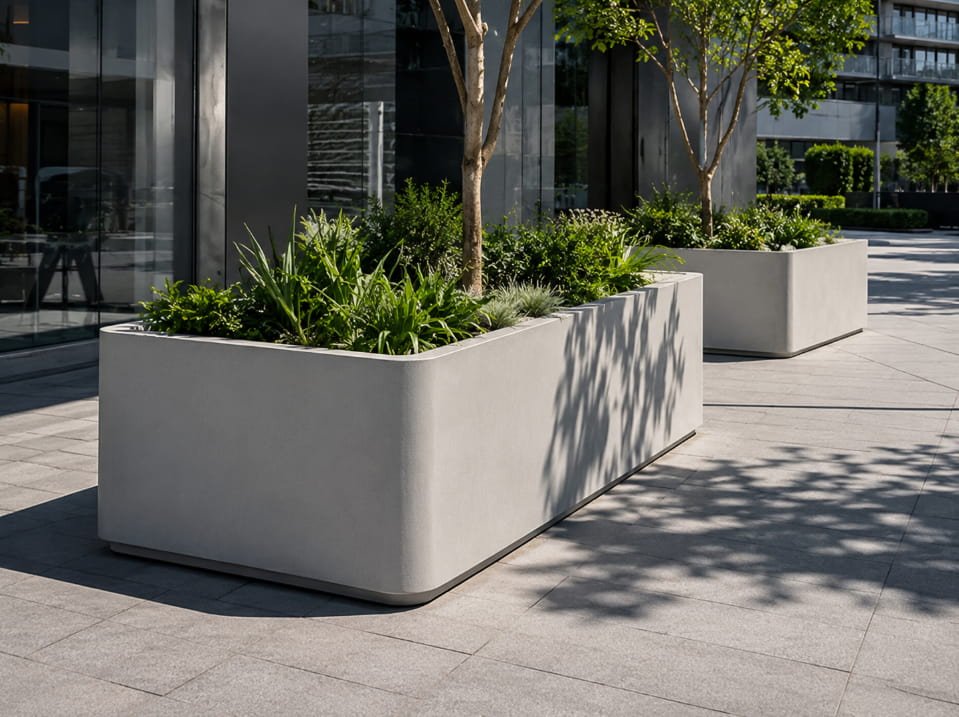
Custom GRC planters are not standard garden pots.
For a commercial landscape project, a planter box may need to fit a specific paving layout, match an architectural finish, meet rooftop load requirements, include drainage details, and arrive safely after international shipping.
That is why custom GRC planters should be managed as project components, not simple decorative products.
GRC, also known as GFRC in North America, is glass fiber reinforced concrete. It is a cement-based composite reinforced with alkali-resistant glass fibers. ACI describes AR glass fiber-reinforced concrete premix products as widely used in precast products for industrial, architectural, civil engineering, and construction applications, with useful properties such as strength, toughness, durability, moisture resistance, dimensional stability, fire resistance, and aesthetics.
For buyers, those material advantages only become valuable when the project is managed correctly.
A good result depends on design review, shop drawings, mold planning, sample approval, production control, curing, finishing, inspection, packing, and shipping.
This guide explains the full process of custom GRC planters from design to delivery, with a practical focus on what architects, landscape contractors, developers, and procurement teams should check before placing an order.
What Are Custom GRC Planters?
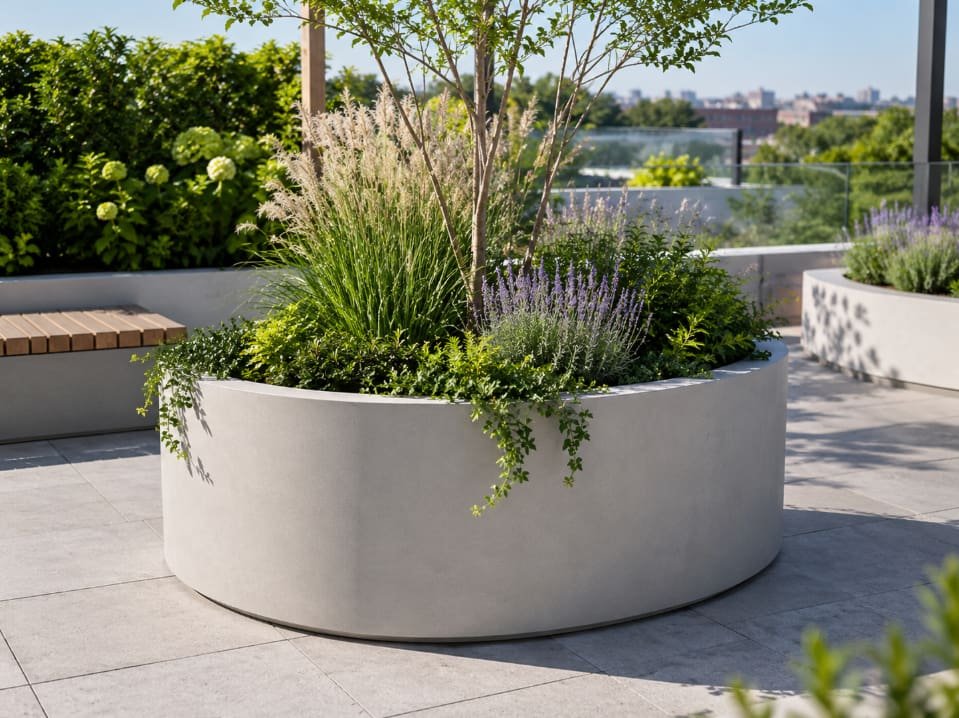
Custom GRC planters are planter boxes manufactured according to project-specific requirements.
These requirements may include size, shape, color, surface finish, wall thickness, drainage holes, embedded parts, lifting method, packaging method, and installation conditions.
Common custom designs include rectangular planters, square planters, round planters, curved planters, L-shaped planters, irregular planters, trough planters, planter bench systems, and modular planter units.
The reason GRC works well for custom planter production is its design flexibility.
ACI notes that GFRC premix products can be produced through several manufacturing processes, including casting, spray premix, press molding, extrusion, calender extrusion, and pultrusion, and that the choice of process depends on the required product performance and appearance.
For planter buyers, this means the material can support different production approaches.
But the supplier still needs to choose the right method for the planter size, shape, finish, and project use.
Why Buyers Choose Custom GRC Planters
Most buyers do not choose custom GRC planters because they want a complicated purchasing process.
They choose them because standard products cannot solve the project problem.
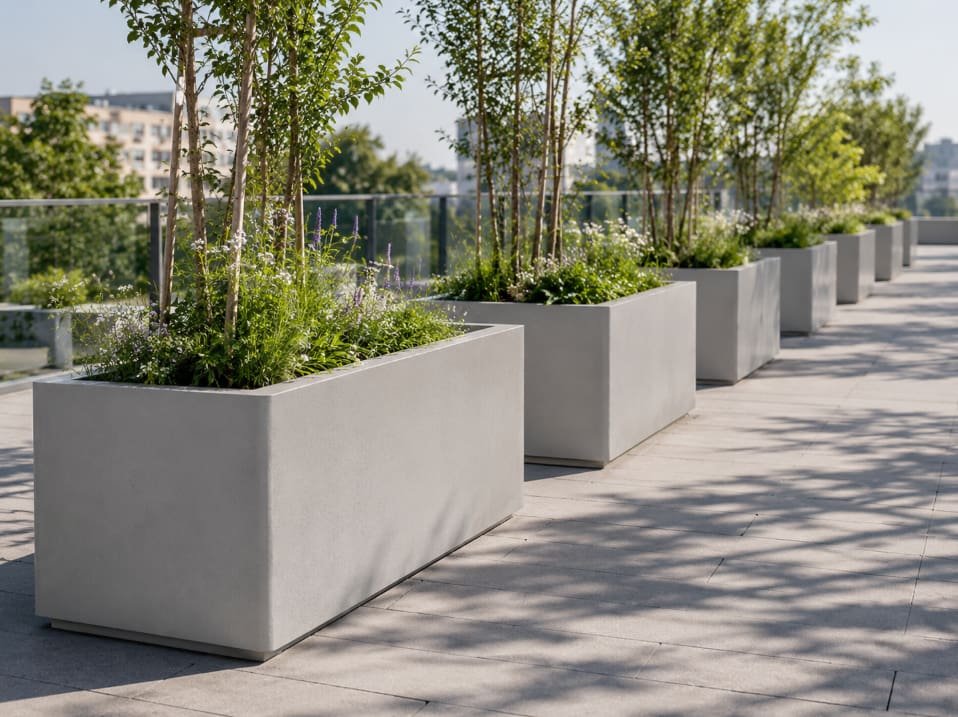
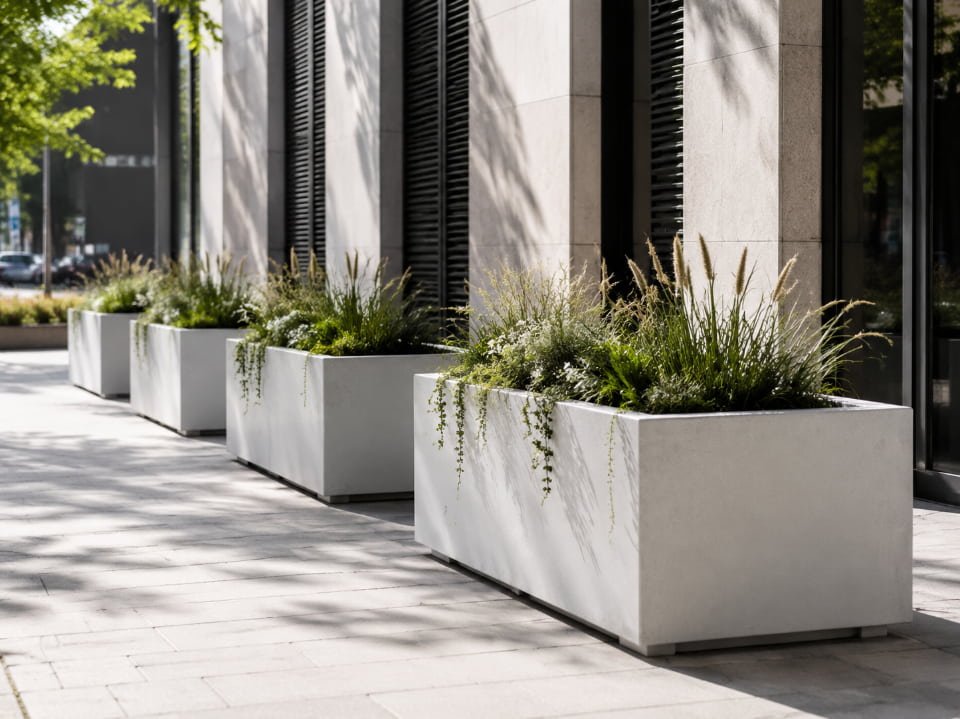
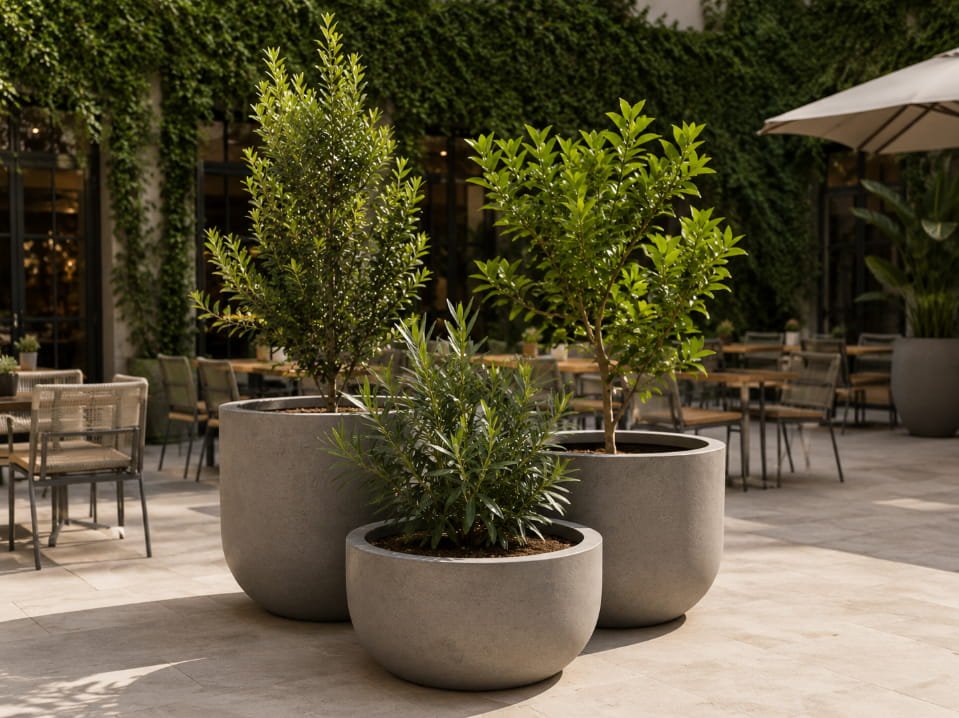
A commercial plaza may need long planters that align with paving joints.
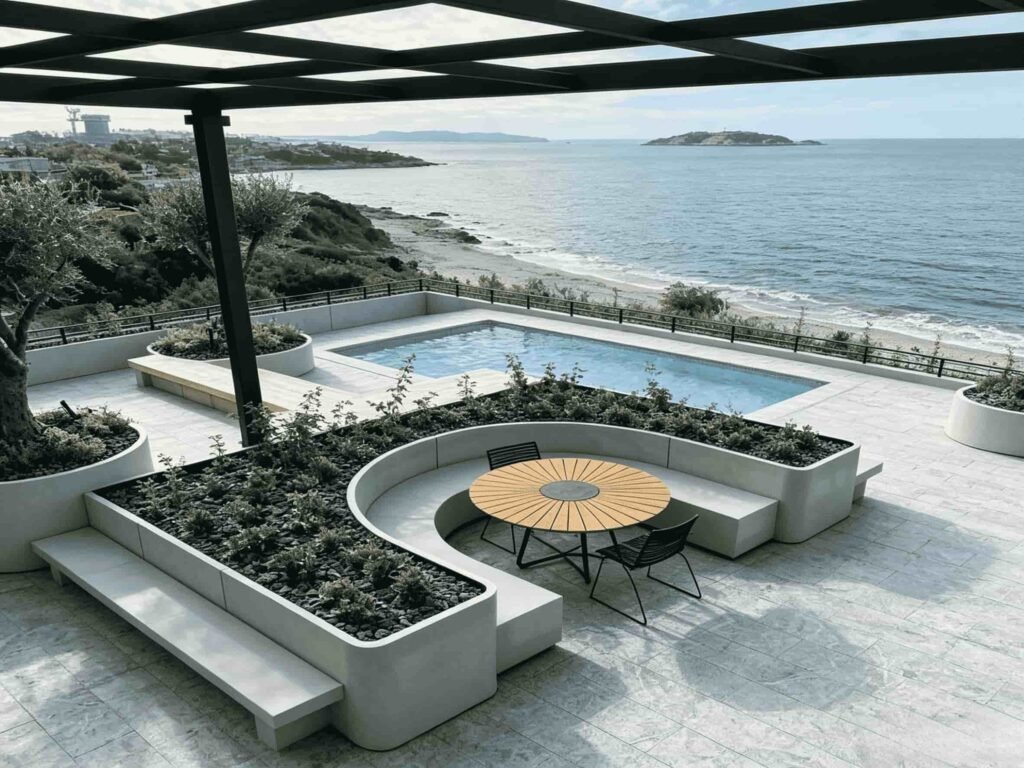
A rooftop garden may need lightweight planter boxes with specific drainage holes.
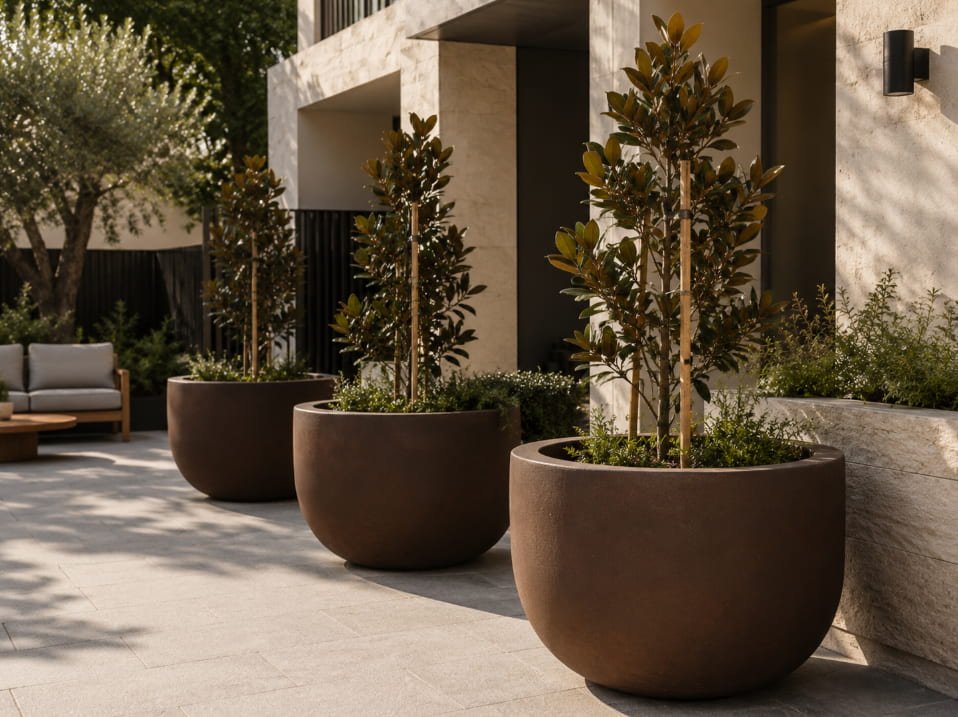
A hotel entrance may need a refined stone-like finish.
A residential development may need hundreds of planters in consistent color and texture.
A public streetscape may need durable modules that can handle outdoor use and repeated cleaning.
In these cases, custom production allows the planter to match the project instead of forcing the project to fit catalog sizes.
That is the main value.
Step 1: Project Brief and Initial Inquiry
The process starts with a clear project brief.
This does not need to be perfect at the first stage. But it should give the supplier enough information to understand the project conditions.
A useful inquiry should include:
Project location.
Application area.
Planter dimensions.
Quantity.
Shape.
Finish reference.
Drainage requirement.
Installation location.
Rooftop or ground-level use.
Expected delivery timeline.
Shipping destination.
If drawings are available, send them early.
If drawings are not available, a sketch with dimensions is still better than only sending reference photos.
Reference photos are useful for visual direction, but they do not provide enough technical detail for accurate pricing, mold planning, or weight estimation.
Step 2: Feasibility Review
Before quoting a custom planter, the supplier should review whether the design is practical for production, transport, and installation.
This is where an experienced manufacturer can add real value.
A planter may look simple in a rendering but create problems in production.
For example, the rim may be too thin.
The planter may be too large to demold safely.
The base may not allow proper drainage.
The shape may be difficult to pack.
The size may not fit efficiently into a shipping container.
The product may be too heavy for rooftop handling.
During feasibility review, the supplier should look at the planter from several angles:
Can the mold be produced accurately?
Can the product be demolded without damage?
Can the wall thickness support the size?
Can the finish be produced consistently?
Can the planter be packed safely?
Can the product be installed on-site?
This review helps avoid expensive changes later.
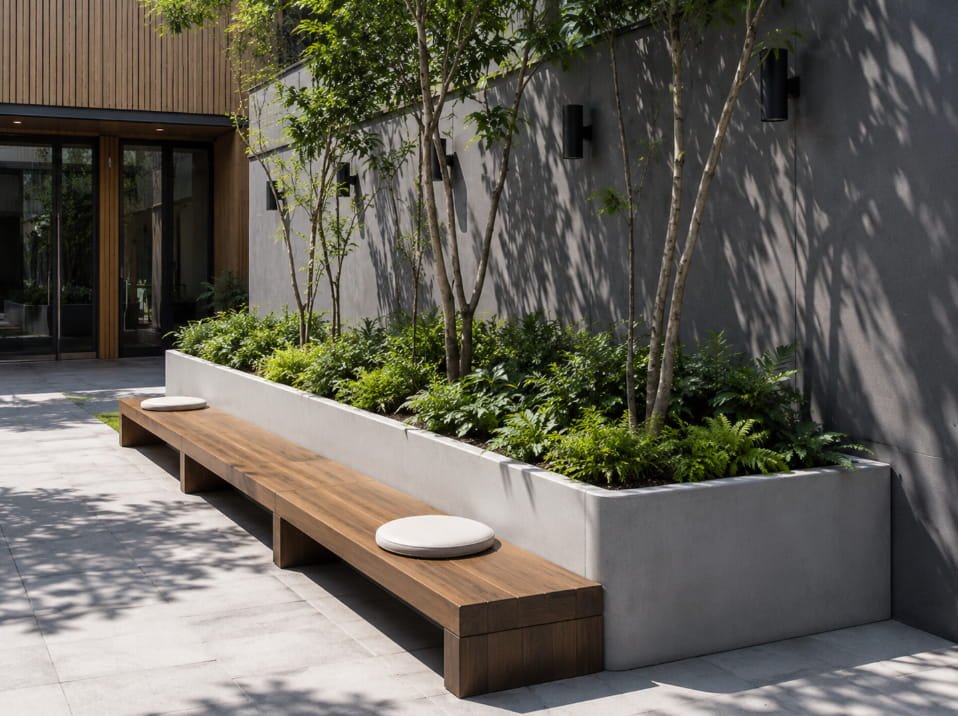
Step 3: Shop Drawing Development
For custom GRC planters, shop drawings are one of the most important parts of the process.
Shop drawings turn the design concept into production information.
They usually include dimensions, wall thickness, rim profile, base details, drainage holes, joint locations, embedded parts, lifting or handling details, finish notes, and packaging direction.
For simple rectangular planters, the drawing may be straightforward.
For large round planters, curved planters, or sectional planters, the drawing becomes more important.
A good shop drawing should answer practical questions before production begins.
Where are the drainage holes?
How thick are the walls?
Is the planter produced in one piece or several sections?
Are there embedded fixing points?
How will the planter be lifted?
How will the edges be finished?
How will units align on-site?
Buyers should review shop drawings carefully.
This is not just a technical step for the factory.
It is a risk-control step for the entire project.
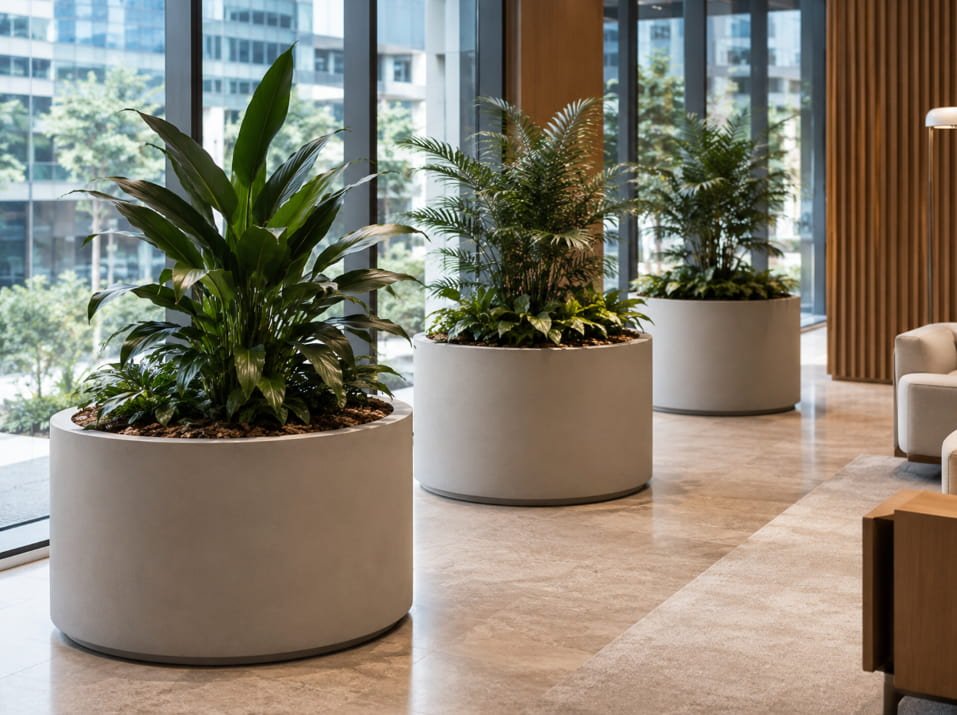
Step 4: Confirming Size, Weight, and Installation Conditions
Size and weight should be discussed early.
Large GRC planters are usually lighter than traditional thick concrete planters, but they are still construction products.
They may require forklifts, pallet jacks, cranes, hoists, or other lifting equipment.
For rooftop gardens, terraces, balconies, and podium landscapes, the buyer should not only consider the empty planter weight.
The total installed load includes the planter body, soil, water, plants, drainage layers, irrigation systems, and any internal structure.
EPA guidance for green roofs notes that structures must be able to support green roof materials under fully saturated conditions. The same logic is useful for rooftop planter planning because wet soil and water retention can significantly affect total load.
A supplier can estimate the planter body weight.
The project engineer should confirm the total structural load.
That distinction is important.
The supplier knows the product.
The engineer knows the building.
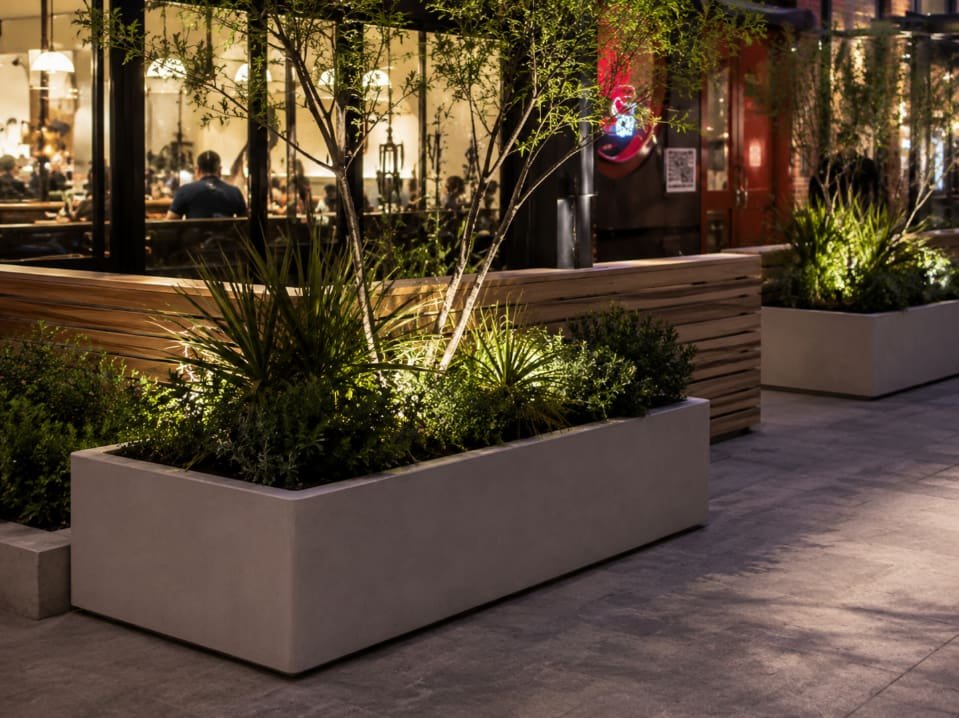
Step 5: Material and Finish Selection
Finish selection is a major part of custom GRC planter projects.
The finish affects appearance, cost, production method, maintenance, and buyer satisfaction.
Common finish options may include:
Smooth concrete finish.
Matte gray finish.
Dark charcoal finish.
Stone-like texture.
Sandblasted texture.
Exposed aggregate effect.
Travertine-like surface.
Custom color based on sample.
Textured or molded surface.
The right finish depends on the project.
A hotel entrance may need a refined surface with tight color control.
A public plaza may benefit from a slightly textured finish that hides minor marks.
A rooftop garden may need a finish that coordinates with paving, decking, and facade materials.
For high-end commercial projects, physical samples are strongly recommended.
Photos can be affected by lighting, camera settings, and screen differences.
A sample gives the buyer, architect, and developer a better basis for approval.
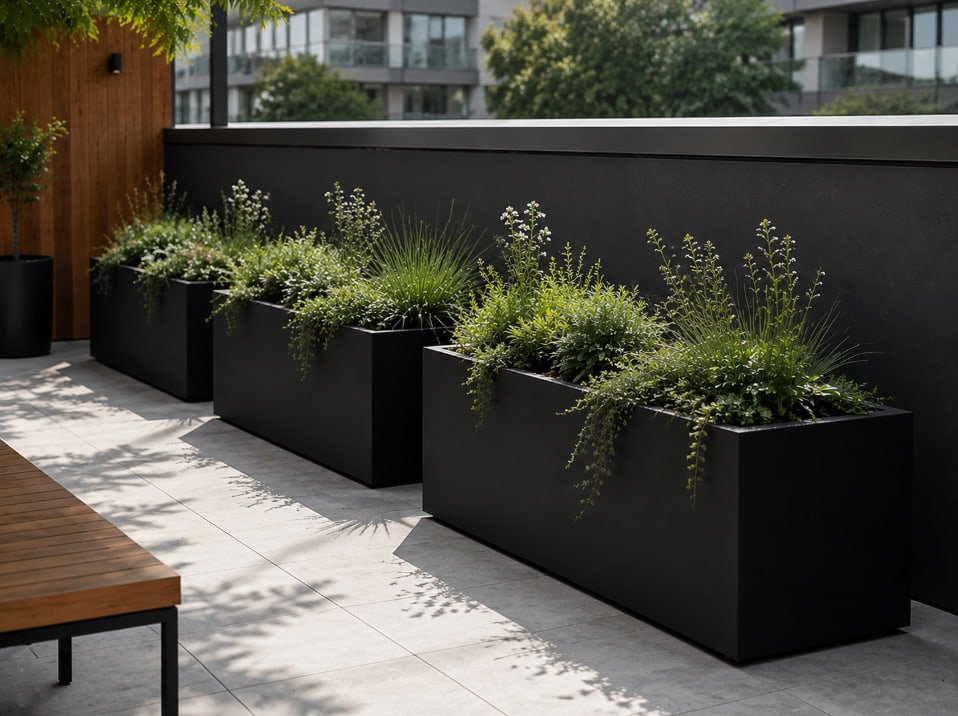
Step 6: Drainage Design
Drainage is one of the most common details buyers underestimate.
A planter holds soil, plants, water, and drainage layers.
If water does not drain properly, the project may face plant health problems, staining, standing water, maintenance issues, or waterproofing concerns.
Drainage should be confirmed before mold production.
Important details include:
Number of drainage holes.
Diameter of drainage holes.
Location of drainage holes.
Base slope if required.
Raised base or foot design.
Internal waterproofing.
Pipe connections.
Overflow design.
Coordination with site drainage.
For rooftop projects, drainage should be coordinated with waterproofing and landscape systems.
For public plazas, drainage should avoid staining visible paving.
For large planter rows, drainage locations should align with the site plan.
The best time to discuss drainage is before production.
The worst time is after delivery.
Step 7: Mold Design and Mold Production
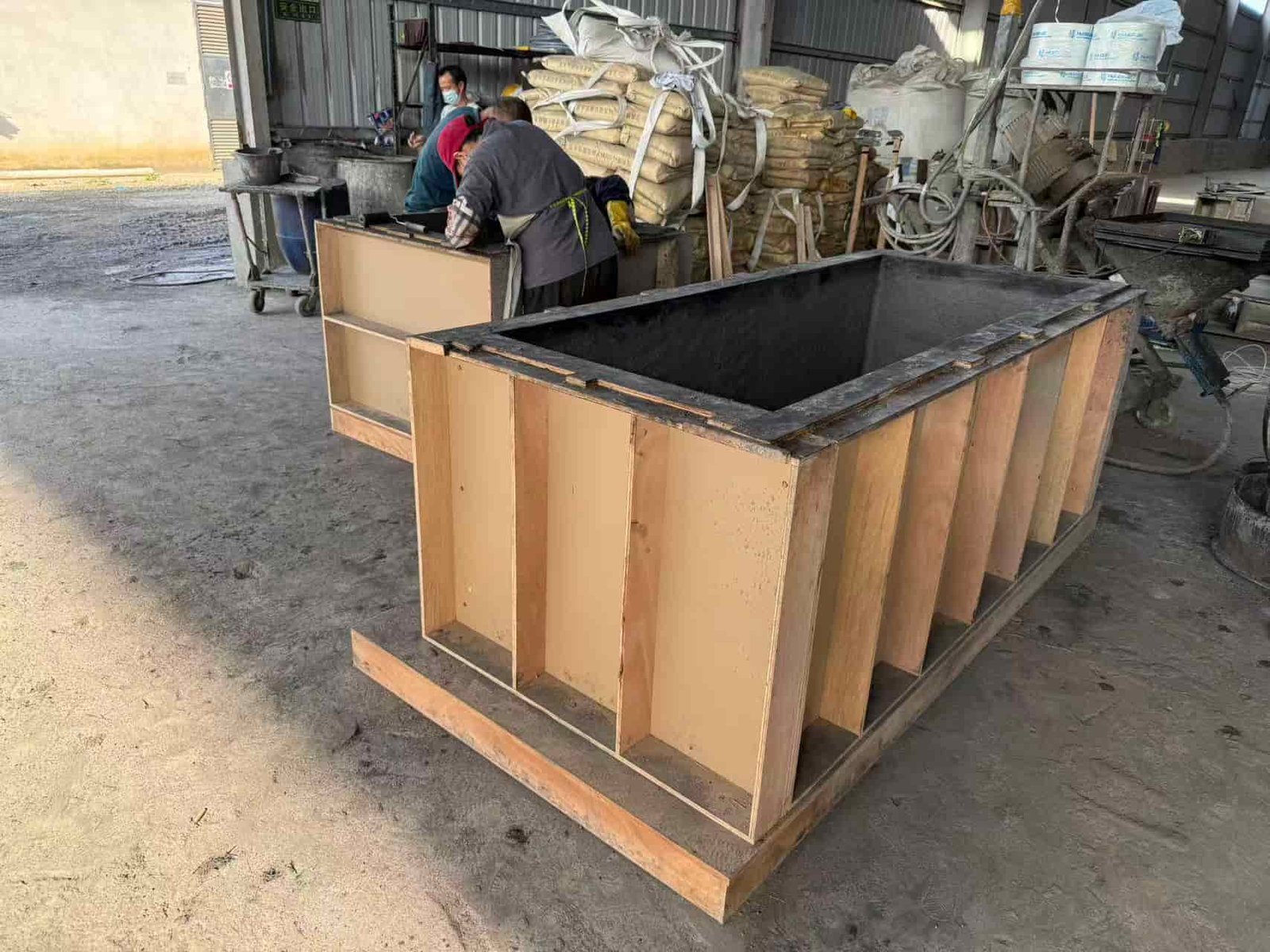
Once drawings and samples are approved, the supplier can move to mold production.
The mold determines the planter shape, surface quality, dimensional accuracy, and production repeatability.
A poor mold can create many problems.
Edges may become uneven.
Surfaces may not match the approved texture.
Dimensions may drift.
Demolding may damage the product.
Repeated units may vary too much.
Mold material and mold structure depend on planter size, shape, quantity, and surface finish.
A small batch of simple rectangular planters may use a different mold system from a large order of curved or irregular planters.
For high-volume commercial projects, mold durability becomes more important.
For complex shapes, mold split lines and demolding direction should be planned carefully.
Buyers do not need to manage every mold detail.
But they should ask whether the mold plan is suitable for the required quantity and shape.
Step 8: First Article or Sample Approval
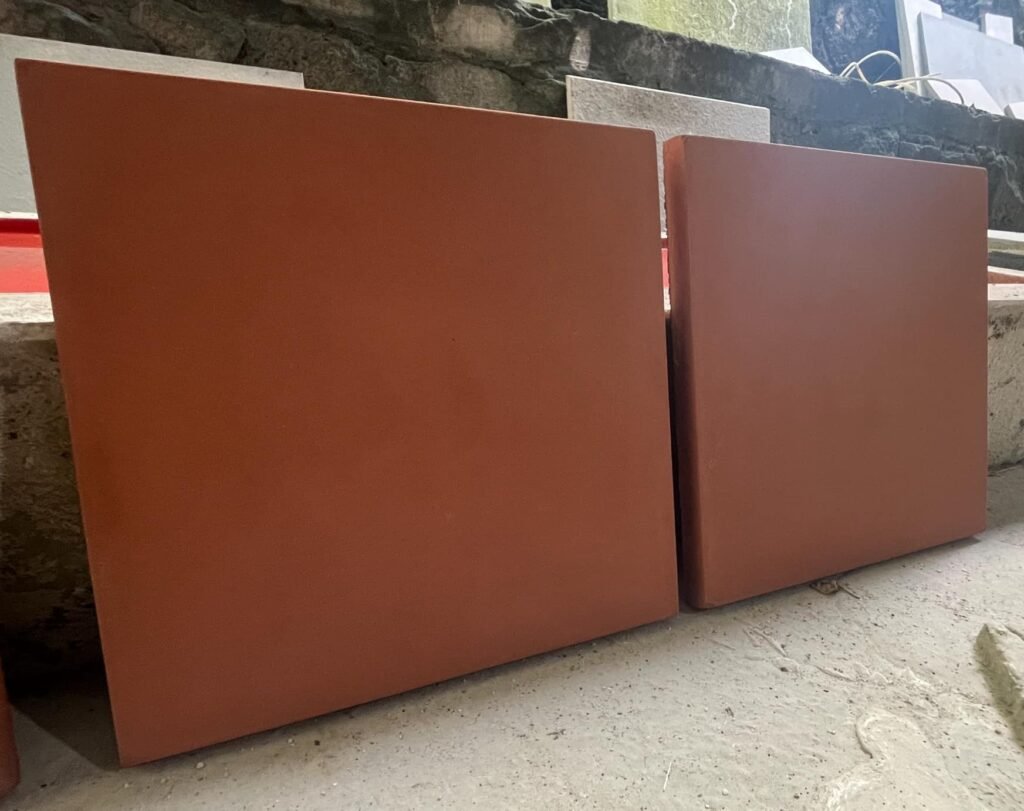
For custom projects, a first article or production sample can reduce risk.
This may be a small material sample, a finish sample, a corner sample, or a full-size prototype depending on project importance.
The sample helps confirm:
Color.
Texture.
Edge quality.
Wall thickness.
Rim profile.
Drainage details.
Surface appearance.
General workmanship.
For large orders, sample approval should happen before mass production.
This is especially important when the project involves hundreds of units, custom colors, visible hotel entrances, residential developments, or public plaza applications.
A sample does not guarantee perfect mass production.
But it gives both buyer and supplier a clear standard.
Without a standard, quality discussions become subjective.
Step 9: GRC Production
After mold and sample approval, the factory begins production.
GRC planters may be produced through different methods depending on the product design and factory process.
ACI describes cast premix and spray premix among the manufacturing processes used for AR GFRC premix products, and notes that manufacturing process selection depends on performance and aesthetic requirements.
For buyers, the important issue is not to memorize production methods.
The important issue is to understand that production control matters.
A supplier should control:
Raw material batching.
Fiber distribution.
Mixing time.
Wall thickness.
Layer placement.
Surface quality.
Compaction.
Demolding time.
Curing process.
Finish consistency.
Each of these details affects the final planter.
A beautiful sample is not enough if the factory cannot repeat the process across the full order.
Step 10: Curing
Curing is a critical step for cement-based products.
GRC planters need time and proper conditions to develop performance.
If products are demolded, moved, packed, or shipped too early, the risk of cracking, surface problems, or handling damage may increase.
Buyers should ask the supplier about curing time and curing method.
The answer may vary depending on product size, production method, climate, and factory conditions.
For export orders, curing is especially important because the product will go through multiple handling stages before installation.
A planter may leave the factory by forklift.
It may be loaded into a container.
It may travel by sea.
It may be unloaded at port.
It may move again by truck.
It may sit on-site before installation.
Good curing helps the planter handle that journey.
Step 11: Surface Finishing
After curing, the planter moves into finishing.
This stage gives the product its final visual character.
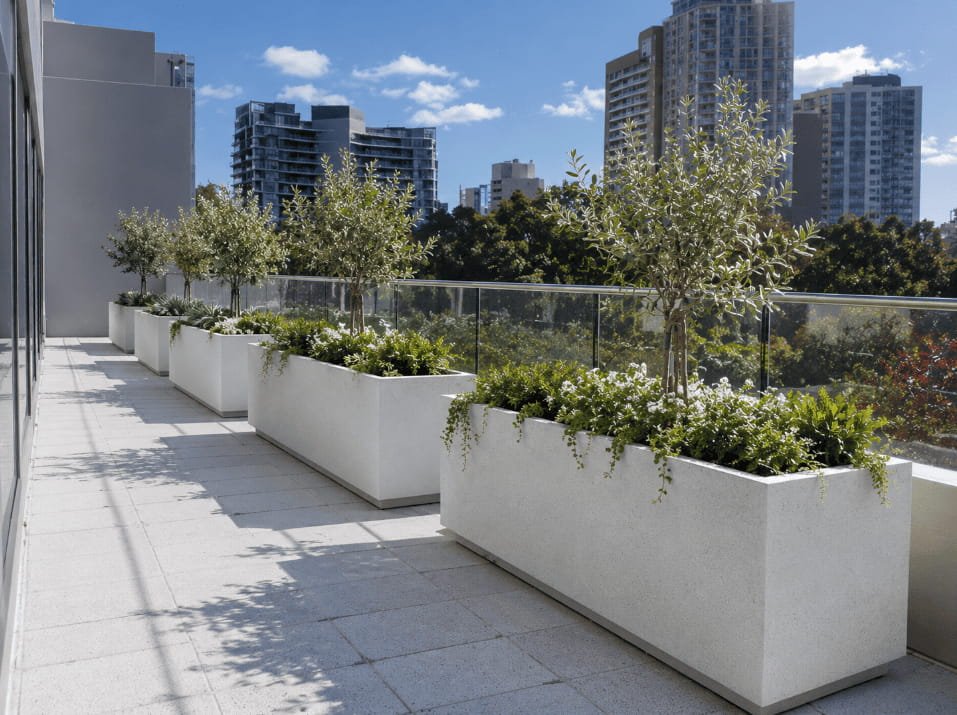
Depending on the approved specification, finishing may include cleaning, sanding, polishing, surface repair, coating, sealing, texture adjustment, color checking, and final inspection.
This is where craftsmanship becomes visible.
For high-end projects, edge quality and surface consistency matter a lot.
A planter at a hotel entrance will be viewed from close range.
A planter in a luxury residential courtyard may be seen every day by residents.
A planter in a public plaza may need to look consistent across many units.
Buyers should request production photos if the finish is important.
For large projects, it can also be useful to compare production pieces against the approved sample before packing.
Step 12: Quality Control
Quality control should happen throughout production, not only at the end.
A final inspection can identify visible problems, but it cannot replace process control.
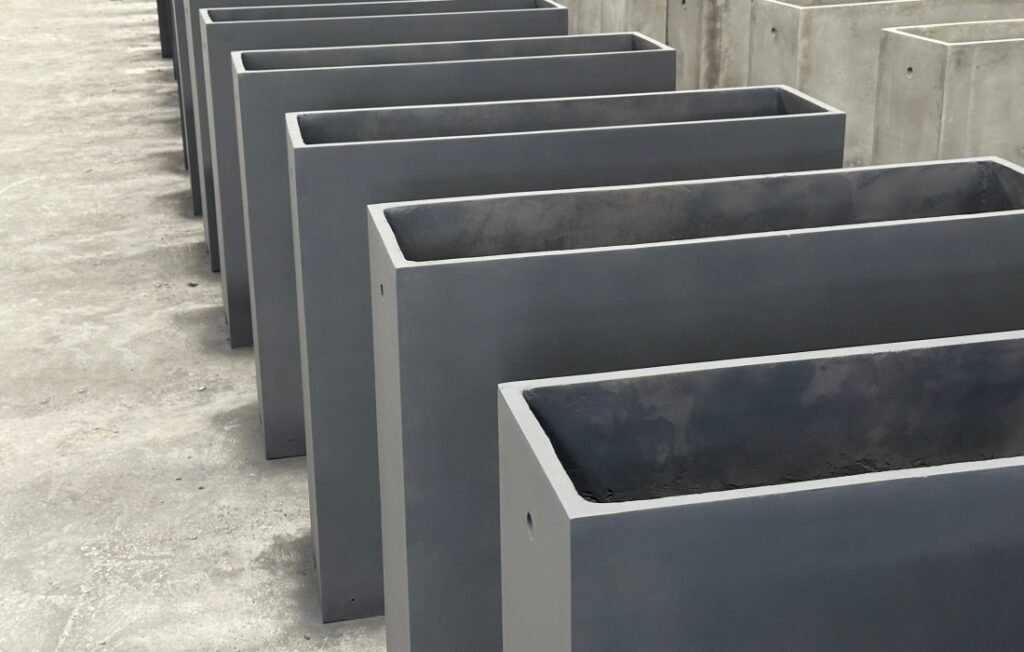
Quality checks for custom GRC planters may include:
Dimension check.
Wall thickness check.
Surface inspection.
Color comparison.
Drainage hole check.
Edge and corner inspection.
Embedded part check.
Crack inspection.
Packing inspection.
Weight confirmation if required.
For projects with higher technical requirements, flexural testing may be discussed. ASTM C947 states that flexural properties of thin-section GFRC products are useful for quality control, specification compliance, research and development, and product design.
Not every planter project requires laboratory testing.
But if the project has engineering requirements, strict specifications, or special application conditions, buyers should discuss testing before production begins.
Testing is easier to plan before manufacturing.
It is harder to add after the order is finished.
Step 13: Pre-Shipment Inspection
Before packing, the supplier should complete a pre-shipment inspection.
This inspection should confirm that the planters match the approved drawings and samples.
For export projects, buyers may request photos or videos of:
Overall product.
Measurement check.
Surface finish.
Drainage holes.
Bottom details.
Edges and corners.
Packing preparation.
Labels.
Final crate condition.
This is a practical step.
It creates a record before shipment.
It also gives the buyer a chance to identify visible issues before the products leave the factory.
For large orders, third-party inspection may be considered.
This is often useful when the project schedule is tight, the order quantity is large, or the destination market has strict project documentation requirements.
Step 14: Export Packaging
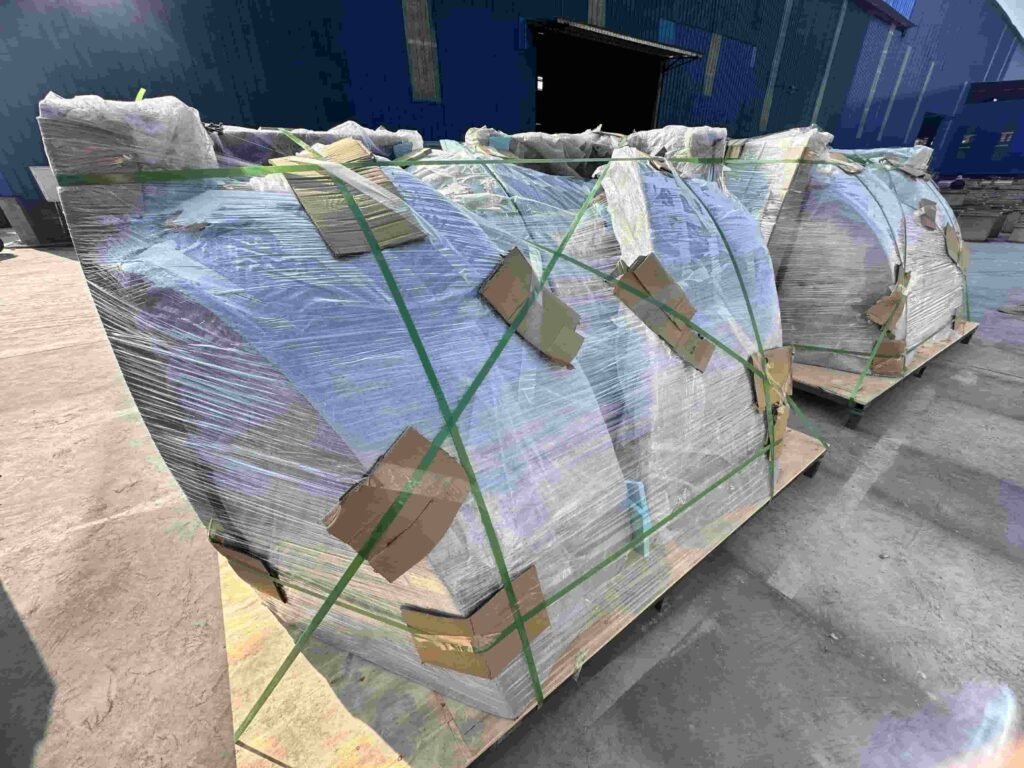
Packaging is one of the most important parts of custom GRC planter delivery.
A well-made planter can still arrive damaged if the packaging is weak.
Large planters need protection against vibration, edge impact, compression, forklift handling, container movement, and unloading risks.
Good export packaging may include:
Wooden crates.
Internal supports.
Foam protection.
Corner guards.
Surface protection.
Pallet base.
Forklift access.
Clear labels.
Loading direction marks.
Moisture protection if required.
The packaging method should match the planter shape.
A rectangular planter, a round planter, and an irregular planter may need different crate designs.
For export orders, buyers should ask for packing photos before shipment.
This is not only for record keeping.
It helps verify whether the supplier has taken protection seriously.
Step 15: Container Loading and Shipping
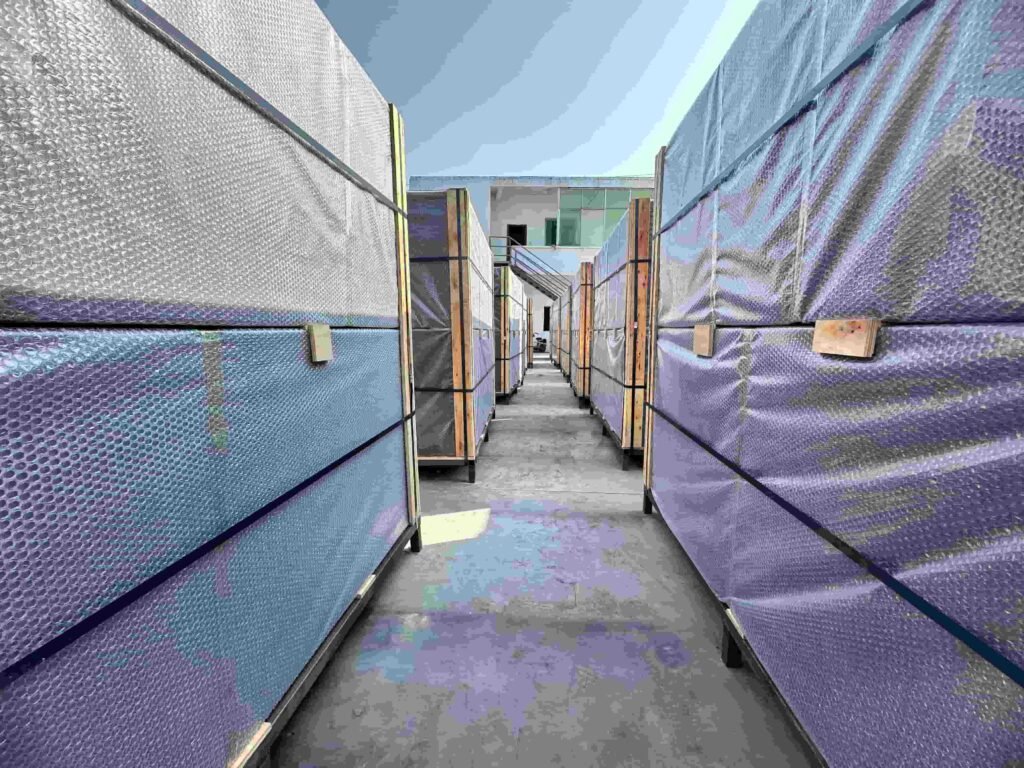
Shipping planters is not only about product weight.
Volume matters too.
GRC planters are often lighter than thick traditional concrete alternatives, but they are still bulky products.
Container loading efficiency can affect total landed cost.
A good supplier should consider packing dimensions, loading direction, stacking possibility, container space, and unloading sequence.
For large projects, container planning should begin before all products are packed.
If planters are produced in multiple sizes, loading order matters.
If some pieces are needed first on-site, the loading plan should consider installation sequence.
For overseas buyers, trade terms also matter.
Common options may include EXW, FOB, CIF, DAP, or DDP.
Each term affects who manages inland transport, export clearance, ocean freight, destination clearance, and final delivery.
Buyers should confirm this before order placement.
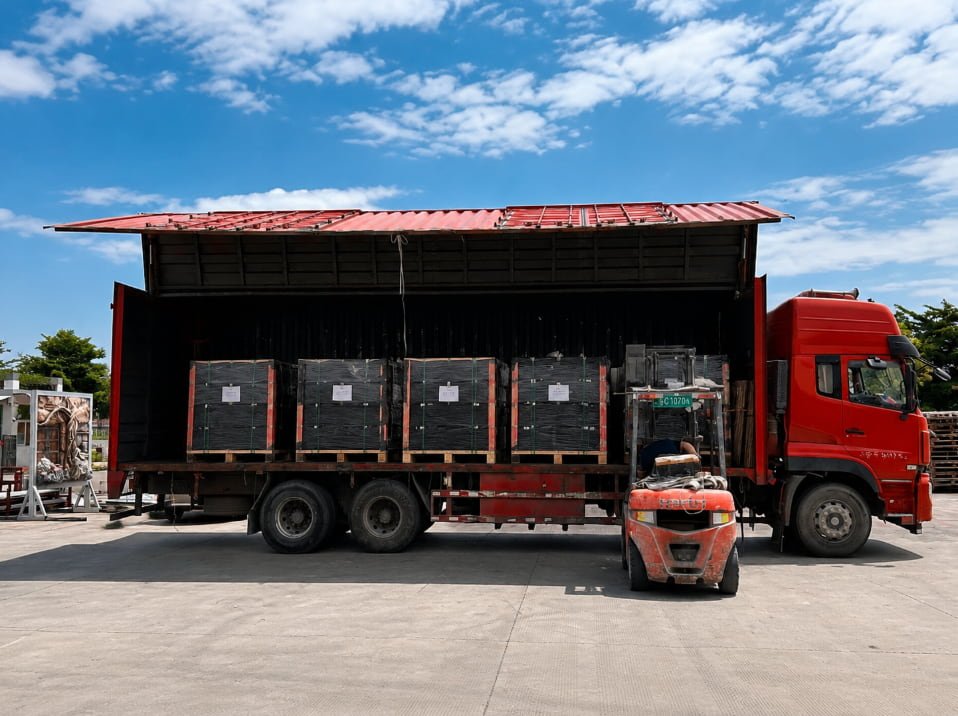
Step 16: Delivery and Site Coordination
Delivery does not end when the container reaches the destination port.
The products still need to be unloaded, transported to the site, stored properly, and installed.
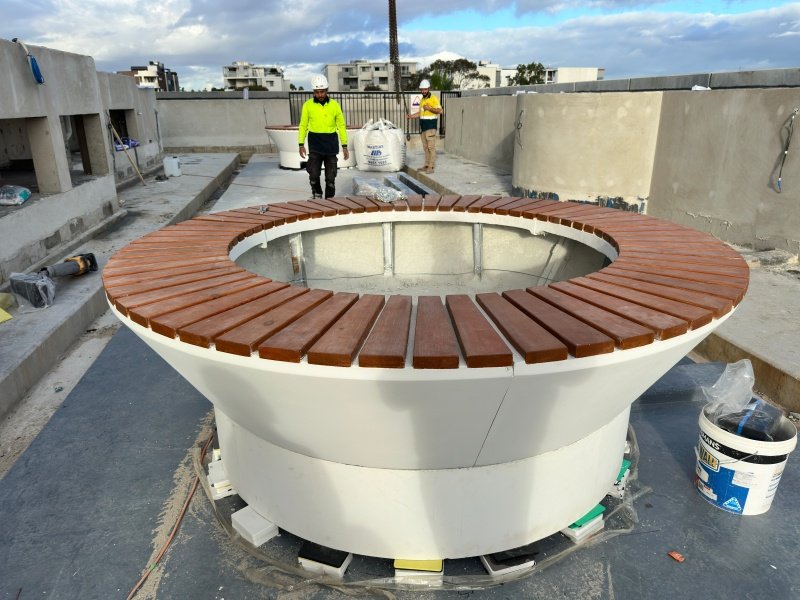
Site teams should understand the planter weight, lifting points, crate handling method, and installation sequence.
For large planters, the supplier should provide basic handling guidance.
For rooftop or high-rise projects, lifting and staging should be planned carefully.
For projects with finished paving or waterproofing, site protection is important.
Planters should not be dragged across finished surfaces.
They should not be stored in unstable stacks.
They should not be lifted from weak points.
Many product damages happen after the goods arrive, not during production.
That is why site coordination matters.
How Long Does the Custom GRC Planter Process Take?
Lead time depends on project complexity.
A simple custom size may move faster.
A large commercial project with many shapes, sample approvals, molds, special finishes, and export packaging will need more time.
The typical timeline includes:
Drawing review.
Quotation.
Sample production.
Sample approval.
Shop drawing confirmation.
Mold production.
First article approval.
Mass production.
Curing.
Finishing.
Inspection.
Packing.
Shipping.
Buyers should not only ask for production time.
They should ask for the full timeline from design confirmation to delivery.
This gives a more realistic view of the project schedule.
For commercial projects, late design changes are one of the biggest causes of delay.
If the buyer changes size, color, drainage, or quantity after mold production, the timeline may be affected.
What Affects the Cost of Custom GRC Planters?
Custom GRC planter cost depends on several factors.
The first factor is size.
Larger planters use more material, require larger molds, need more labor, occupy more factory space, and require stronger packaging.
The second factor is shape.
Simple rectangular planters are usually easier to produce than curved, round, L-shaped, or irregular planters.
The third factor is quantity.
A custom mold cost can be spread across more units in a large order. For small custom orders, mold cost has a bigger impact on unit price.
The fourth factor is finish.
Special colors, stone-like textures, sandblasted finishes, coatings, and strict sample matching can increase cost.
The fifth factor is packaging.
Export packaging should be treated as part of project cost, not an optional extra.
The sixth factor is shipping.
Planters are bulky products, so container loading efficiency affects total landed cost.
When comparing supplier quotes, buyers should compare the full scope.
A lower price may not include drawings, samples, strong packaging, proper curing, QC documentation, or shipping support.
Common Mistakes Buyers Should Avoid
Mistake 1: Starting With Price Only
Price is important.
But in custom planter projects, price without specification is not meaningful.
A supplier needs dimensions, quantity, finish, drainage, drawings, destination, and installation details to quote accurately.
Mistake 2: Approving Finish Only by Photos
Photos can be misleading.
Lighting, camera settings, and screen differences can change how a color looks.
For important projects, approve physical samples before mass production.
Mistake 3: Ignoring Drainage
Drainage should be part of the drawing review.
Changing drainage holes after production is difficult and may damage the product.
Mistake 4: Forgetting Installation Conditions
A planter may be easy to produce but hard to install.
If the site has narrow access, rooftop lifting, elevators, or finished paving, tell the supplier early.
Mistake 5: Underestimating Packaging
Export shipping involves many handling stages.
Weak packaging can create chips, cracks, surface damage, and project delays.
Mistake 6: Skipping Pre-Shipment Inspection
Once the products leave the factory, correction becomes harder.
Inspection before packing and loading can reduce risk.
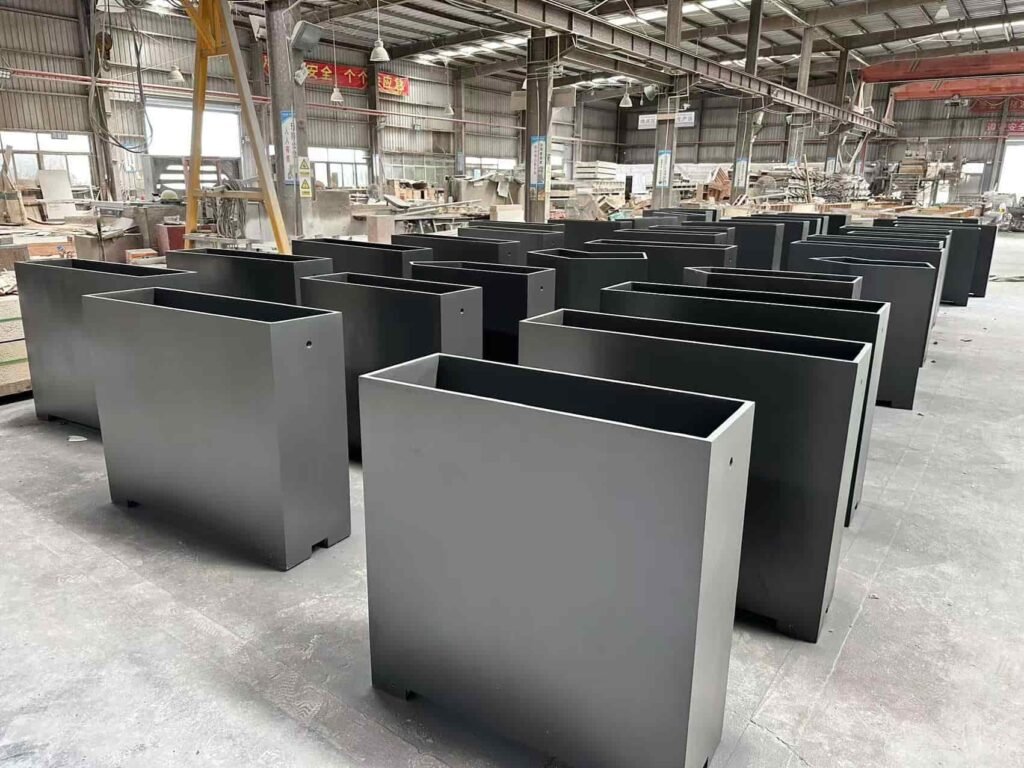
Buyer Checklist Before Ordering Custom GRC Planters
Before confirming an order, buyers should check:
Project location.
Application area.
Planter dimensions.
Shape.
Wall thickness.
Finish reference.
Color sample.
Drainage design.
Rooftop or ground-level use.
Estimated weight.
Installation method.
Shop drawings.
Mold plan.
Sample approval.
Curing time.
QC process.
Packing method.
Shipping term.
Delivery destination.
Required documents.
After-sales support.
This checklist helps reduce uncertainty.
It also makes communication with the supplier more efficient.
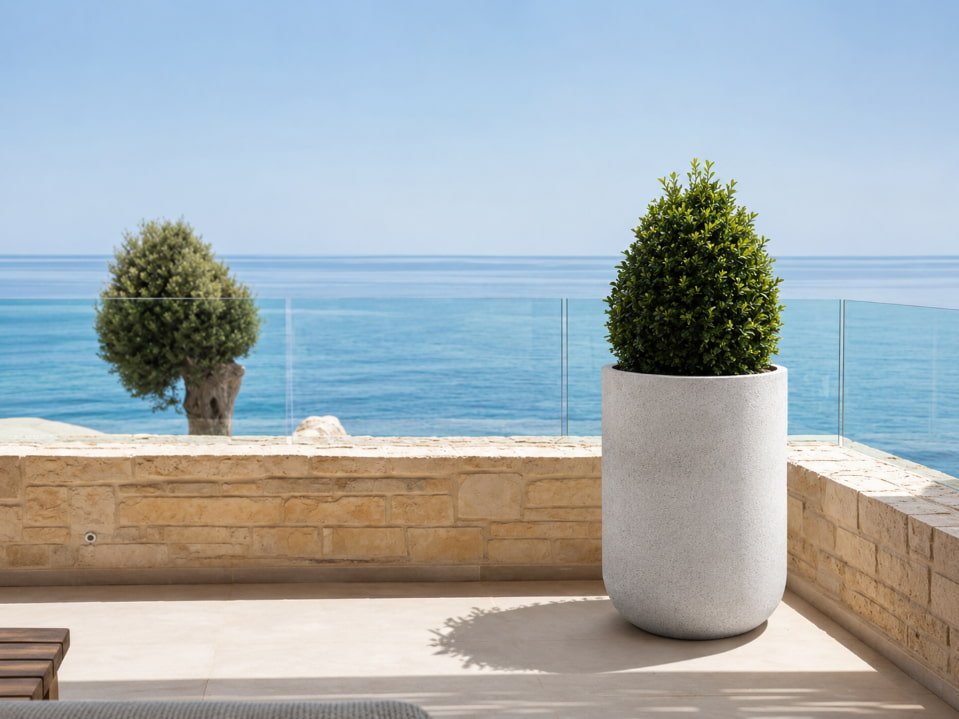
What Makes a Good Custom GRC Planter Supplier?
A good supplier should do more than produce a planter.
They should help control project risk.
For custom GRC planters, a professional supplier should be able to:
Review drawings.
Suggest practical adjustments.
Prepare shop drawings.
Produce samples.
Control mold accuracy.
Manage production quality.
Check dimensions.
Control finish consistency.
Design export packaging.
Provide shipping support.
Communicate clearly.
Support after-sales questions.
The best supplier is not always the one who replies with the fastest price.
The better supplier is the one who asks the right questions before production starts.
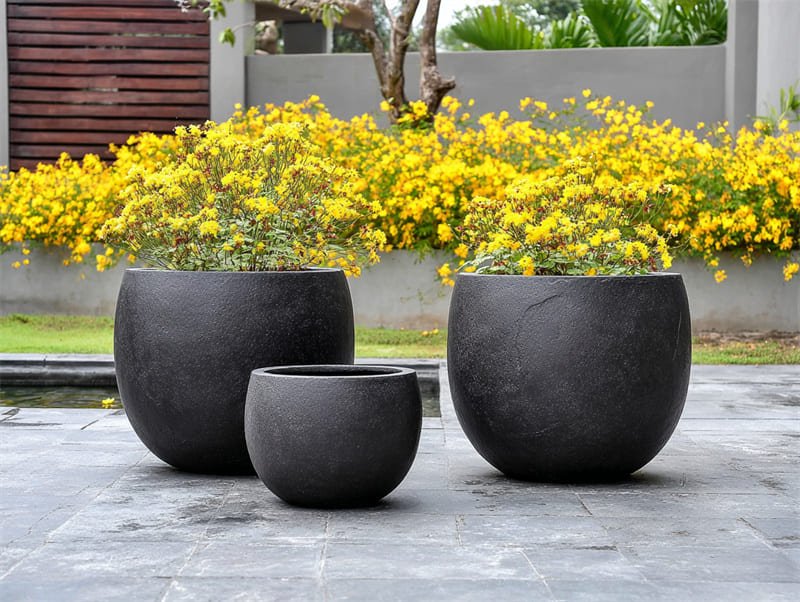
Final Recommendation
Custom GRC planters are a strong option for commercial landscape projects that require architectural appearance, custom sizing, reduced body weight, outdoor durability, drainage coordination, and export-ready delivery.
But the success of a custom planter project depends on process control.
The design must be reviewed.
The drawings must be clear.
The sample must be approved.
The mold must be accurate.
The production must be controlled.
The packaging must be strong.
The delivery plan must match the site conditions.
When each step is handled properly, custom GRC planters can help turn landscape design concepts into practical, buildable, and long-lasting outdoor elements.
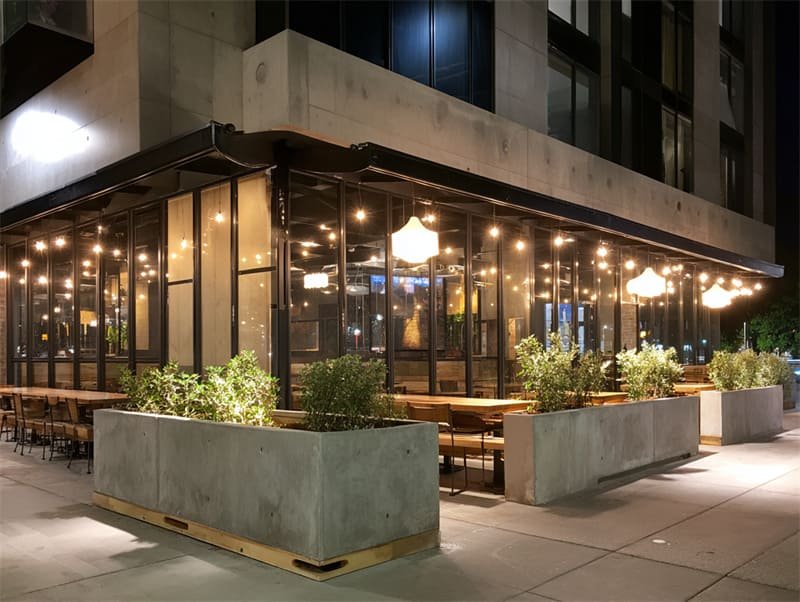
Conclusion
In custom GRC planter projects, the real risk is usually not the material itself but the missing details between design, production, packing, and site installation. From a supplier’s perspective, the best project outcomes usually come from early technical communication, approved samples, clear drawings, and realistic delivery planning.
Conshell is a custom GRC planter manufacturer providing lightweight, durable, and project-specific planter solutions for commercial landscapes, rooftop gardens, hotel entrances, public plazas, streetscapes, and high-end residential developments. We support custom sizes, shapes, colors, surface finishes, drainage details, sectional designs, shop drawing coordination, and export packaging based on project requirements. Our team works with architects, contractors, developers, landscape companies, and procurement teams to turn design concepts into reliable planter systems.
If you are planning a custom GRC planter project, send us your drawings, dimensions, quantity, finish requirements, drainage details, project location, and installation conditions. Our team will review your requirements and recommend a suitable solution for your project.