

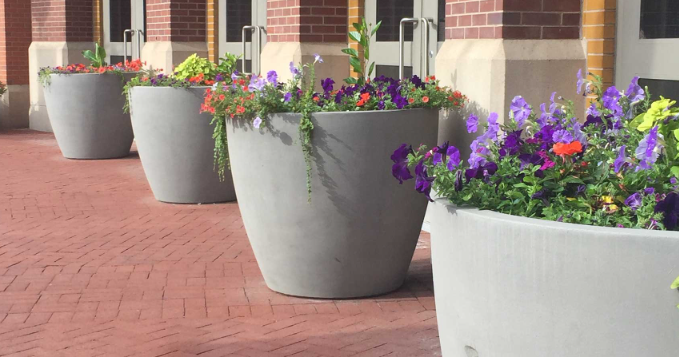
Outdoor planters face much tougher conditions than indoor decorative pots.
They need to handle sun, rain, wind, irrigation, soil pressure, temperature changes, site handling, and long-term maintenance.
For commercial projects, the question is not only whether a planter looks good. The real question is whether the material can support the design, installation, and outdoor performance requirements of the project.
Yes, GRC planters are a good choice for many outdoor projects when they are properly designed, manufactured, cured, drained, finished, packed, and installed. They are especially suitable for commercial landscapes, rooftop gardens, hotel entrances, public plazas, streetscapes, and custom outdoor spaces.
Below, we will explain why GRC planters work well outdoors, what buyers should check before ordering, and when GRC may or may not be the best material for your project.
What Are GRC Planters?
GRC stands for glass reinforced concrete.
In North America, many architects and buyers also use the term GFRC, which means glass fiber reinforced concrete.
GRC is a cement-based composite material made with cement, fine aggregate, water, admixtures, and alkali-resistant glass fibers. The Architectural Precast Association describes GFRC as a lightweight and durable material that can be cast into many shapes, colors, and textures. It also notes that glass fiber reinforcement can provide higher flexural and tensile strength than normal concrete, supporting thin-wall casting applications.
For outdoor planter boxes, this material structure is important.
A planter must hold soil, plants, water, and drainage layers. It also needs to maintain its shape, surface finish, and visual quality after long-term exposure.
GRC allows manufacturers to produce planter boxes with a concrete-like architectural appearance while reducing some of the weight and handling challenges of traditional thick concrete planters.
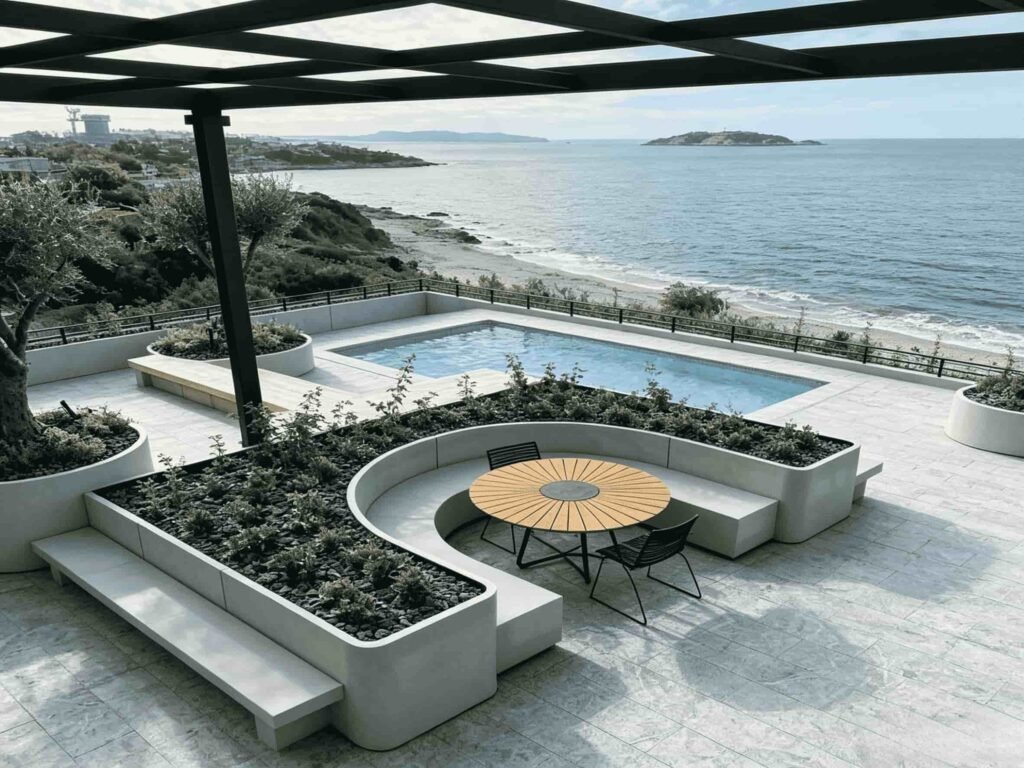
Are GRC Planters Suitable for Outdoor Use?
Yes, GRC planters can be suitable for outdoor use in many commercial and architectural landscape projects.
However, the material name alone does not guarantee performance.
A good outdoor planter depends on several factors:
- Material formulation.
- Fiber reinforcement.
- Wall thickness.
- Curing process.
- Drainage design.
- Surface finish.
- Packaging.
- Installation method.
- Maintenance conditions.
ACI notes that AR glass fiber-reinforced concrete premix products can provide a useful balance of strength, toughness, durability, moisture resistance, dimensional stability, fire resistance, and aesthetics for precast applications.
That combination of properties is one reason GRC is widely used in architectural and exterior construction products.
For buyers, the practical takeaway is simple.
GRC can work very well outdoors, but only when the supplier understands outdoor project requirements.
Why GRC Planters Work Well Outdoors
Outdoor projects usually involve several requirements at the same time.
The planter must resist weather exposure.
It must support soil and planting systems.
It must be practical to transport and install.
It must also match the project’s architectural design.
GRC performs well because it offers a useful balance of appearance, strength, weight control, and customization.
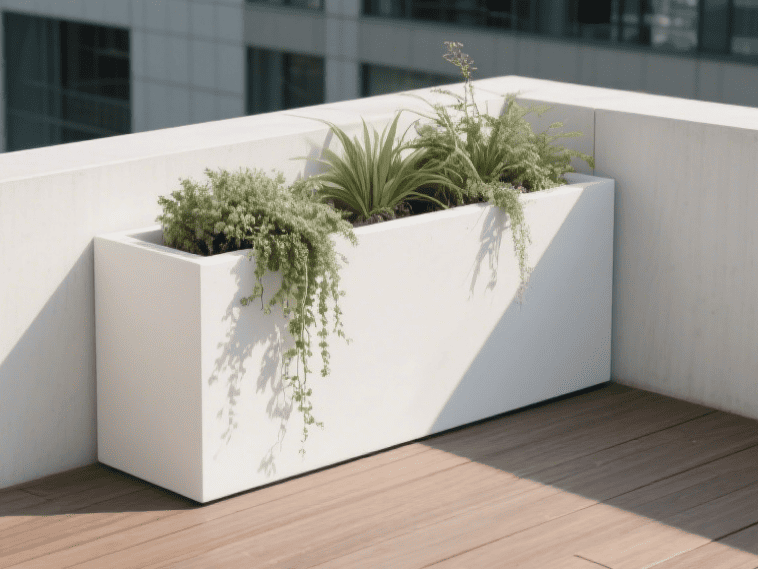
Weather Resistance
Outdoor planters are exposed to rain, sunlight, temperature changes, irrigation, cleaning, and sometimes freeze-thaw conditions.
GRC is a cement-based material, so it fits many exterior architectural applications. Its performance also depends on the use of alkali-resistant glass fibers. The GRCA specification states that glass fibers used in GRC should be alkali resistant and formulated to retain strength in hydraulic cement environments.
This matters because cement is an alkaline environment.
For buyers, it is not enough to ask whether a planter is “weatherproof.”
A better question is:
What materials, fiber type, curing process, finish system, and quality control does the supplier use?
That question gives you a clearer view of long-term outdoor performance.
Reduced Weight Compared With Traditional Concrete
Weight is one of the main reasons buyers consider GRC for outdoor projects.
Traditional concrete planters can become very heavy, especially in large sizes. This may increase shipping cost, lifting difficulty, structural load, and installation time.
GRC planters can often be manufactured with thinner wall sections while keeping a solid architectural look. GFRC is commonly used in thin-wall applications and projects where lighter weight is valuable.
This is especially useful for:
- Rooftop gardens.
- Terraces.
- Balconies.
- Podium landscapes.
- Hotel entrances.
- Commercial plazas.
- Projects with limited lifting access.
- A GRC planter is not weightless.
Large planters are still substantial products. But compared with many thick concrete alternatives, GRC can often make transportation and installation more manageable.
For rooftop projects, buyers should also calculate the total installed load. This includes the planter body, soil, water, plants, drainage layers, irrigation parts, and any internal support system.
The supplier can provide estimated product weight. The project engineer should confirm the final structural load.
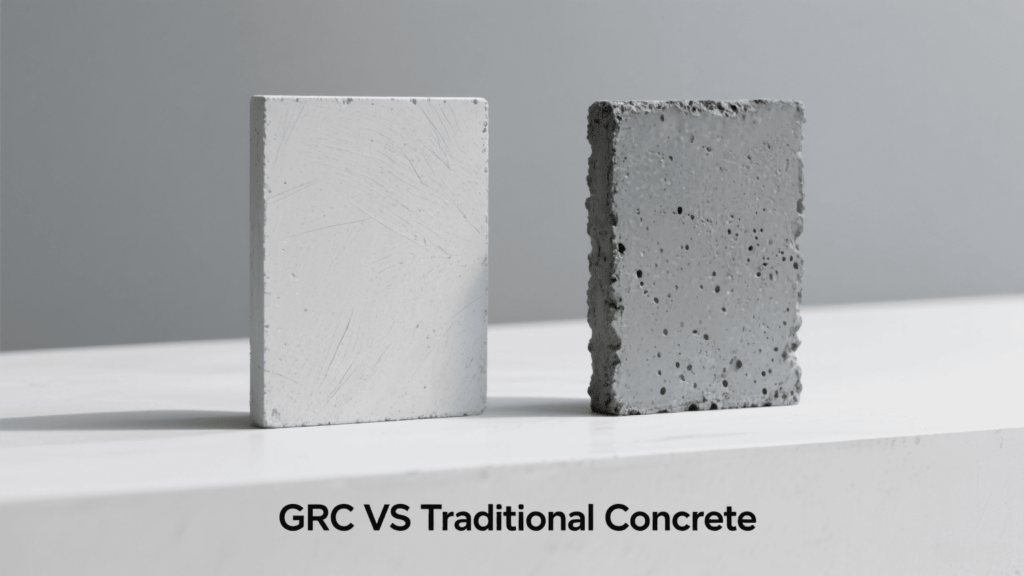
Custom Size and Shape
Outdoor commercial projects rarely use only standard planter sizes.
A hotel entrance may need large rectangular planters.
A rooftop garden may require long trough planters with specific drainage positions.
A public plaza may need modular planter boxes that align with paving, seating, and pedestrian movement.
A high-end residential development may need curved, round, or irregular planters to match the landscape design.
GRC is suitable for these projects because it is mold-based.
Manufacturers can produce custom sizes, shapes, colors, textures, edge profiles, and drainage details according to project drawings.
This is one of the strongest advantages of GRC.
The planter can become part of the design system instead of looking like a product added after the landscape was completed.
Architectural Appearance
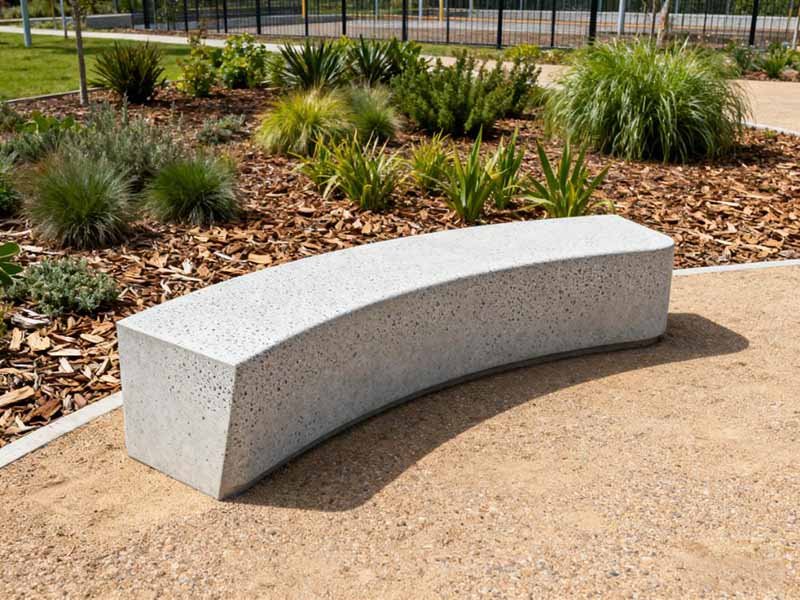
GRC planters can provide a concrete-like, stone-like, or mineral surface that works well in modern outdoor spaces.
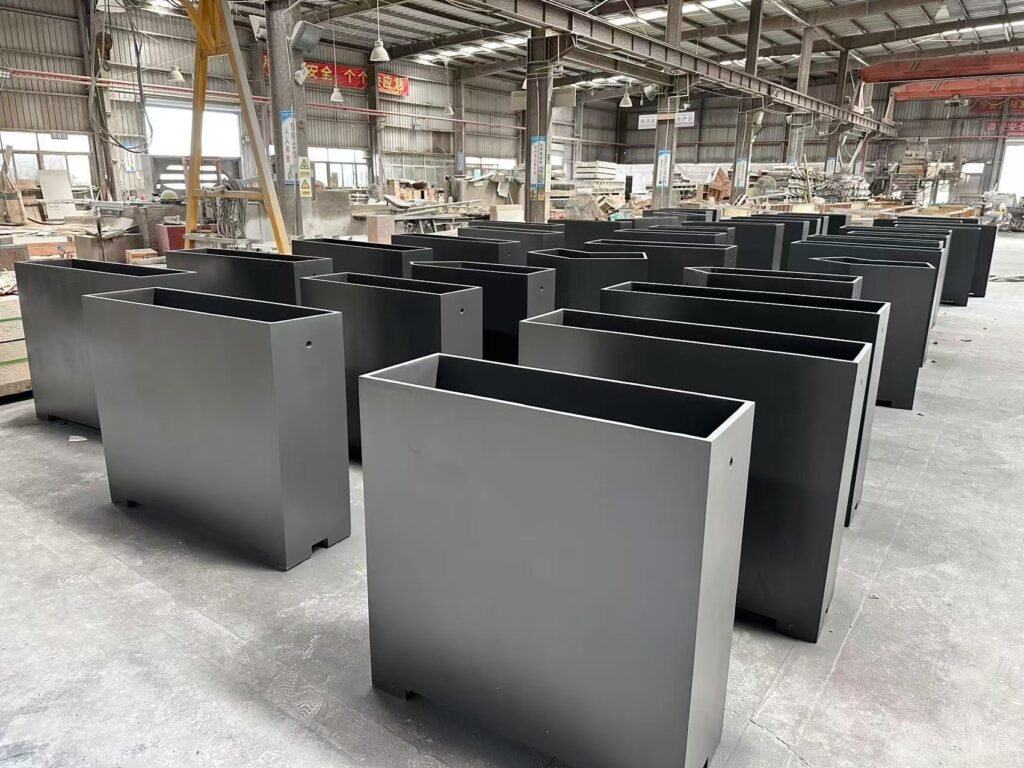
They can be produced in smooth gray, dark charcoal, warm stone, sandblasted texture, matte finish, or custom colors based on approved samples.
For commercial projects, consistency is often more important than one attractive sample.
If a project needs 50, 100, or 300 planters, the supplier must control color, texture, dimensions, and surface quality across the full batch.
This is why sample approval is important before mass production.
Photos are useful during early communication, but physical samples are better for final confirmation.
Where Are Outdoor GRC Planters Commonly Used?
GRC planters are commonly used in projects where appearance, durability, weight, and customization all matter.
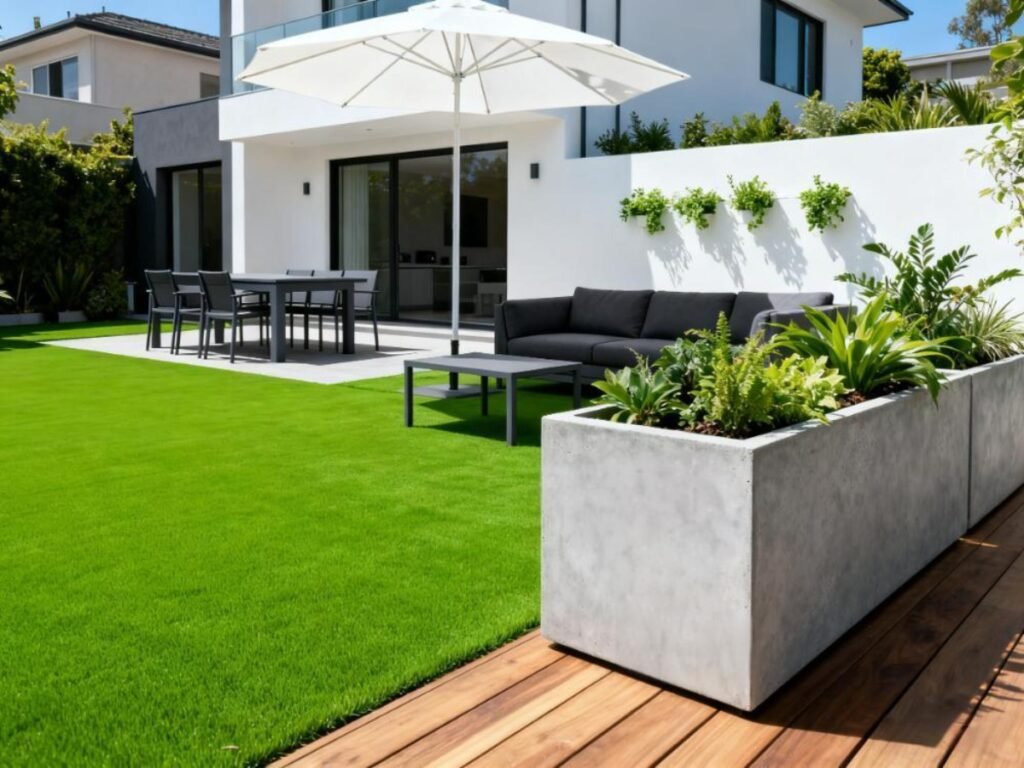
Commercial Plazas
In commercial plazas, planters help organize pedestrian areas, define seating zones, support greenery, and improve the overall quality of the outdoor environment.
Large GRC planters can create a clean architectural look while supporting custom project layouts.
Rooftop Gardens
Rooftop gardens require careful weight and drainage planning.
GRC planters may be a practical choice because they can reduce the planter body weight compared with many traditional concrete planters.
However, rooftop use should always involve structural review.
The planter itself is only one part of the load.
Hotel Entrances and Resorts
Hotels and resorts often use planters to create a strong first impression.
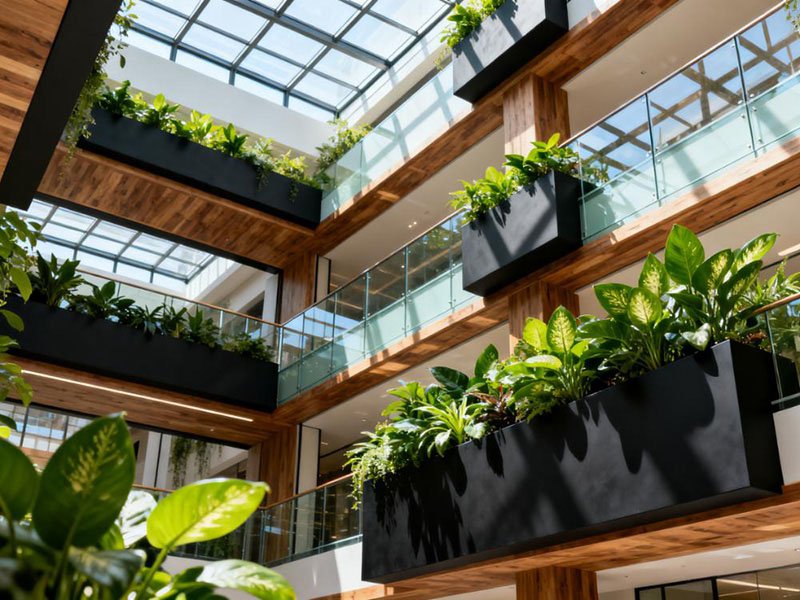
Large GRC planters can frame entrances, guide circulation, enhance courtyards, and improve outdoor dining or poolside areas.
For these projects, finish quality, edge details, and color consistency are especially important.
Public Spaces and Streetscapes
Public spaces require durable outdoor elements.
GRC planters can be used in parks, walkways, public plazas, streetscapes, and urban greening projects.
For public-use areas, buyers should also consider stability, cleaning, repairability, drainage, and surface resistance.
High-End Residential Developments
In residential developments, outdoor planters help connect the building and landscape design.
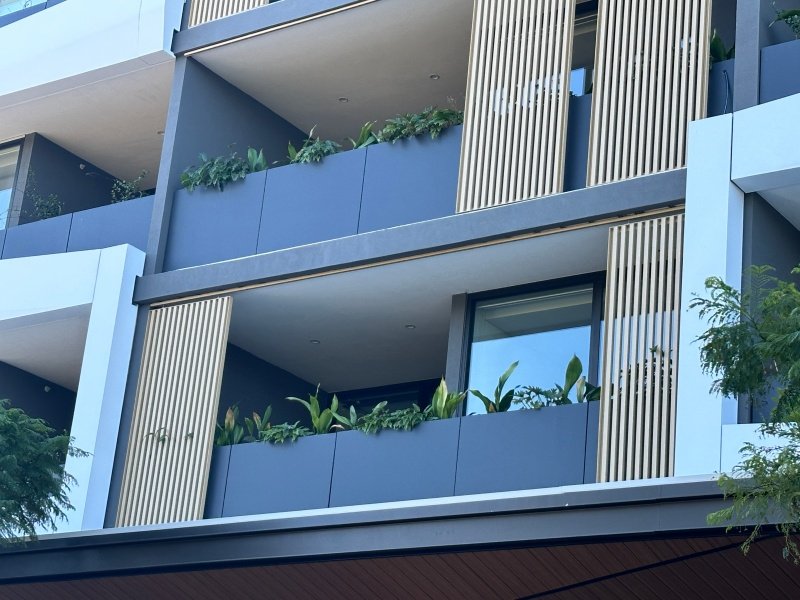
They are often used around entrances, terraces, balconies, courtyards, garden paths, and shared outdoor areas.
Custom GRC planters can help create a unified material language across the project.
What Buyers Should Check Before Ordering Outdoor GRC Planters
A GRC planter can perform well outdoors, but the details need to be correct.
Here are the main points buyers should review before placing an order.
Drainage Design
Drainage is one of the most important details for outdoor planters.
Poor drainage can cause water accumulation, plant health problems, staining, and maintenance issues.
Before production, buyers should confirm:
- Drainage hole quantity.
- Drainage hole size.
- Drainage hole location.
- Raised base or foot design.
- Internal waterproofing requirement.
- Overflow requirement.
- Pipe connection if needed.
For rooftop projects, drainage should be coordinated with waterproofing and landscape systems.
Drainage should never be treated as a late-stage detail.
Wall Thickness and Reinforcement
Wall thickness affects strength, weight, cost, and durability.
If the wall is too thin, the planter may not perform as expected.
If the wall is too thick, the product may become heavier and more expensive than necessary.
A professional supplier should recommend wall thickness based on planter size, shape, application, lifting method, and transportation route.
Curing Process
Curing is critical for cement-based products.
If a planter is demolded, moved, packed, or shipped too early, quality may be affected.
Buyers should ask how long the planters are cured before packing and how the factory controls curing conditions.
This is especially important for export orders because the products need to survive long-distance transportation before installation.
Surface Finish
The surface finish should fit the project environment.
A smooth finish may work well for modern commercial buildings.
A textured finish may be more practical for public spaces where minor marks are less visible.
A dark finish may look premium, but it may show dust, scratches, or mineral marks more clearly.
Buyers should choose the finish based on design intent, location, exposure, and maintenance expectations.
Freeze-Thaw Conditions
For cold climates, freeze-thaw resistance should be considered.
ASTM C666 covers laboratory test methods for determining the resistance of concrete specimens to repeated freezing and thawing cycles.
This does not mean every planter project needs the same test requirement.
It means buyers in cold regions should discuss climate conditions with the supplier. Drainage, water absorption, surface protection, and maintenance become more important in freeze-thaw environments.
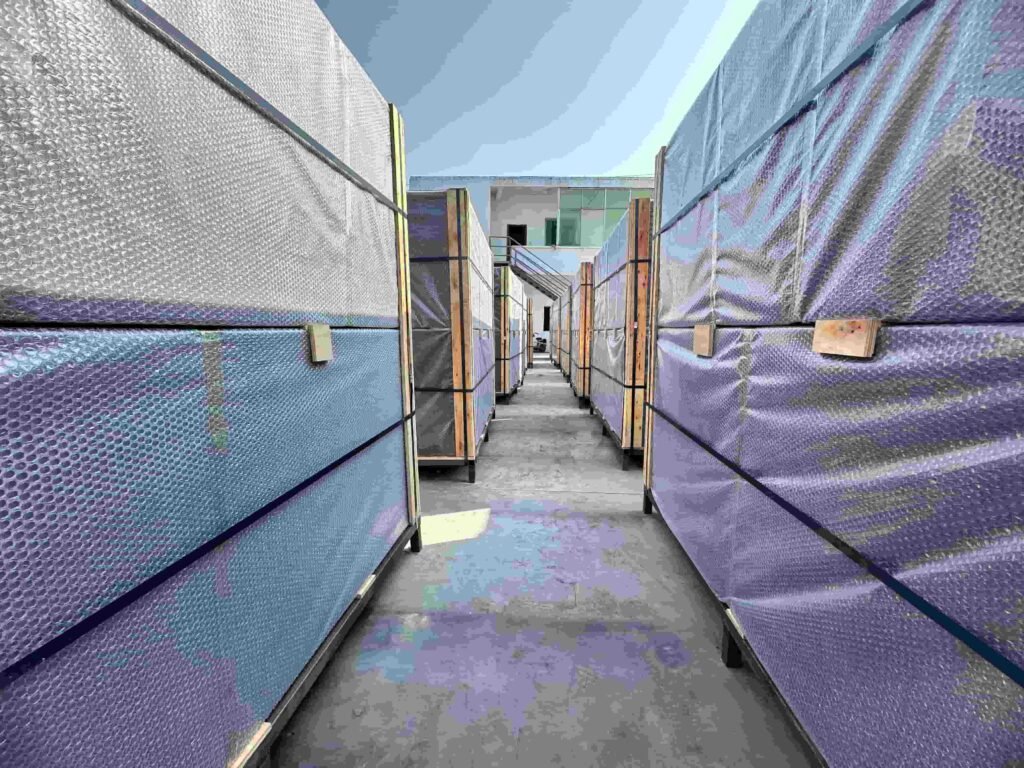
Packaging for Outdoor Project Delivery
Outdoor planter projects often involve large and heavy products.
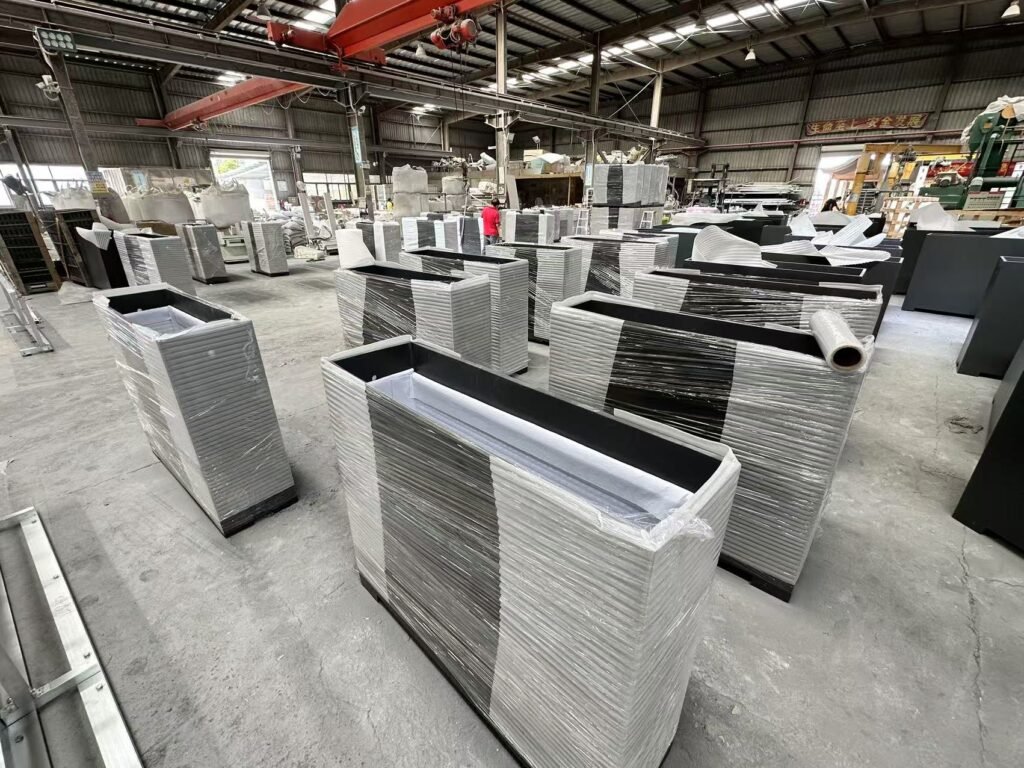
Even if GRC reduces product weight compared with traditional concrete, the planter still needs proper packaging.
For export orders, buyers should request packing photos and loading photos before shipment.
Good packaging should protect corners, rims, surfaces, drainage areas, and irregular shapes.
A well-made planter with poor packaging is still a risky order.
Are GRC Planters Low Maintenance?
GRC planters are practical for many commercial outdoor projects, but no outdoor material is completely maintenance-free.
Maintenance depends on finish, climate, plant type, irrigation system, exposure, and cleaning method.
Typical maintenance may include removing dirt and leaves, checking drainage holes, cleaning surface stains, avoiding harsh chemicals, and repairing small chips when needed.
For large commercial projects, buyers should request basic cleaning and maintenance recommendations from the supplier.
For export projects, it may also be useful to request a small repair kit with matching material.
When Are GRC Planters a Good Choice?
GRC planters are a good choice when the project requires:
- Large outdoor planters.
- Custom dimensions.
- Concrete-like appearance.
- Reduced body weight.
- Rooftop or terrace use.
- Commercial landscape quality.
- Custom color or texture.
- Export shipping.
- Consistent finish across many units.
- Custom drainage details.
They are especially suitable for hotels, commercial plazas, shopping malls, residential developments, public spaces, rooftop gardens, and streetscape projects.
When Might GRC Not Be the Best Choice?
GRC may not be necessary for every project.
If the project only needs small decorative pots, a lower-cost material may be enough.
If the installation is temporary, lightweight plastic or fiberglass may be more economical.
If the design requires a very heavy fixed barrier, traditional concrete may be considered.
If the project needs a natural timber appearance, wood or wood-look alternatives may be more suitable.
The right choice depends on the project goal.
For commercial outdoor projects, GRC becomes more valuable when the buyer needs a balance of appearance, durability, customization, and practical installation.
Common Mistakes Buyers Should Avoid
The first mistake is ignoring drainage.
Drainage should be confirmed before production. Changing drainage details after production can be difficult and costly.
The second mistake is approving finish only by photos.
Lighting and screen differences can change how a color looks. For important projects, physical samples are safer.
The third mistake is forgetting the total installed load.
For rooftop and elevated projects, empty planter weight is not enough. Buyers should also consider soil, water, plants, drainage layers, and irrigation systems.
The fourth mistake is underestimating packaging.
International shipping includes multiple handling stages. Proper packaging is essential for reducing damage risk.
The fifth mistake is choosing by price alone.
A low unit price may not include proper curing, finish control, quality inspection, or export packaging. For commercial projects, these missing details can create higher costs later.
Final Recommendation
GRC planters are a strong option for outdoor projects when buyers need durable, customizable, and architectural planter solutions.
They are especially useful for commercial landscapes, rooftop gardens, hotel entrances, public plazas, streetscapes, and high-end residential developments.
However, buyers should evaluate more than the material name.
The best results usually come from clear drawings, confirmed drainage, approved samples, proper curing, reliable packaging, and a supplier with outdoor project experience.
Conclusion
In outdoor projects, a planter should be judged by how well it performs through production, shipping, installation, drainage, maintenance, and long-term exposure. From a supplier’s perspective, GRC is often a practical material when buyers need large custom planters with architectural finishes and manageable installation weight.
Conshell is a custom GRC planter box manufacturer providing durable, lightweight, and project-specific planter solutions for commercial landscapes, rooftop gardens, hotel entrances, public plazas, streetscapes, and high-end residential developments. We support custom sizes, shapes, colors, surface finishes, drainage details, and export packaging based on project requirements. Our team works with architects, contractors, developers, landscape companies, and procurement teams to turn design concepts into reliable outdoor planter systems.
If you are planning an outdoor GRC planter project, send us your drawings, dimensions, quantity, finish requirements, drainage details, and project location. We will review your requirements and recommend a suitable planter solution for your project.