

Introduction
Commercial landscapes need planter boxes that do more than hold plants.
They need to support the design intent, handle outdoor exposure, fit the project layout, reduce installation problems, and maintain a consistent appearance over time.
That is why many architects, landscape contractors, developers, and procurement teams consider GRC planters for commercial outdoor projects.
GRC stands for glass reinforced concrete. In North America, many buyers also know it as GFRC, or glass fiber reinforced concrete.
It is a cement-based composite material reinforced with alkali-resistant glass fibers. Compared with traditional thick concrete planters, GRC planters can often provide a lighter body, strong architectural appearance, and better flexibility for custom sizes and finishes.
Below are 11 practical benefits of using GRC planters for commercial landscapes.
1. GRC Planters Offer a Strong Architectural Look
Commercial landscapes need visual consistency.
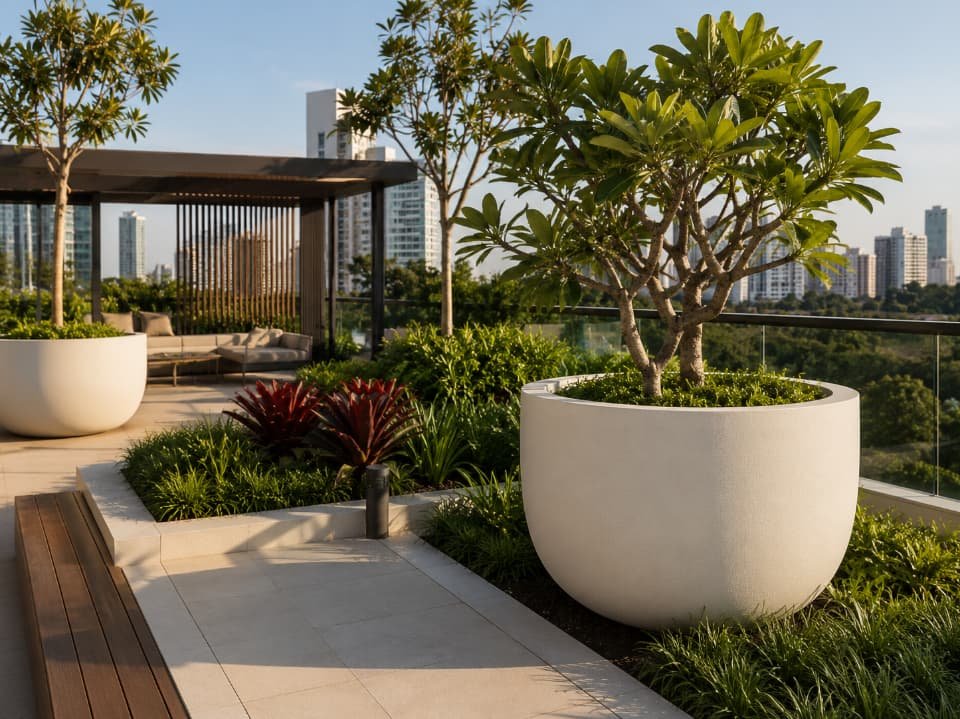
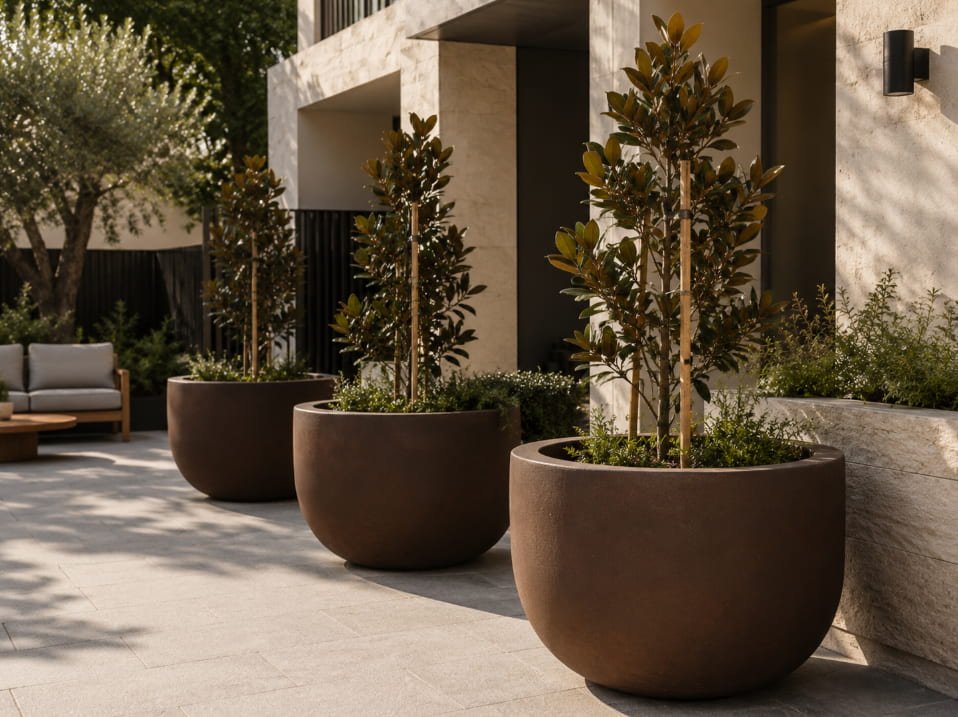
A planter at a hotel entrance, public plaza, shopping mall, or residential development is not just a container. It becomes part of the architecture.
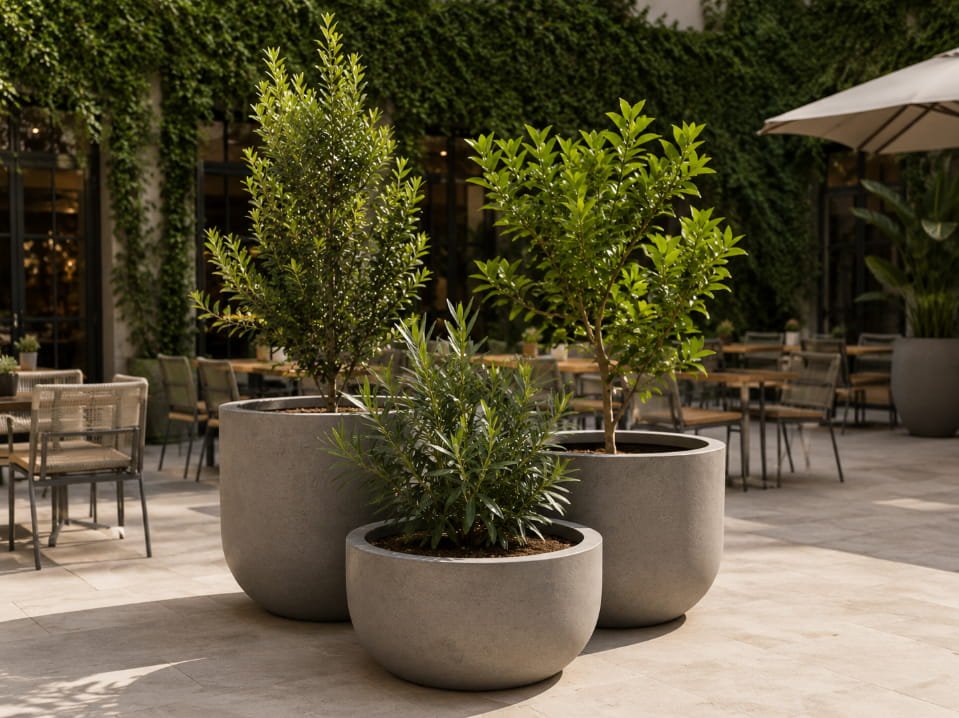
GRC planters provide a concrete-like, stone-like, or mineral surface that works well with modern buildings, paving, facades, outdoor furniture, and landscape systems.
They can support a clean, solid, and permanent appearance without looking overly decorative.
For projects that need a premium outdoor environment, this architectural character can be a major advantage.
2. They Are Lighter Than Many Traditional Concrete Planters
Weight is one of the biggest concerns in commercial planter projects.
Traditional concrete planters can become very heavy, especially in large sizes. This affects transportation, lifting, rooftop loading, installation, and site handling.
GRC planters can often be produced with thinner wall sections while still maintaining a solid appearance.
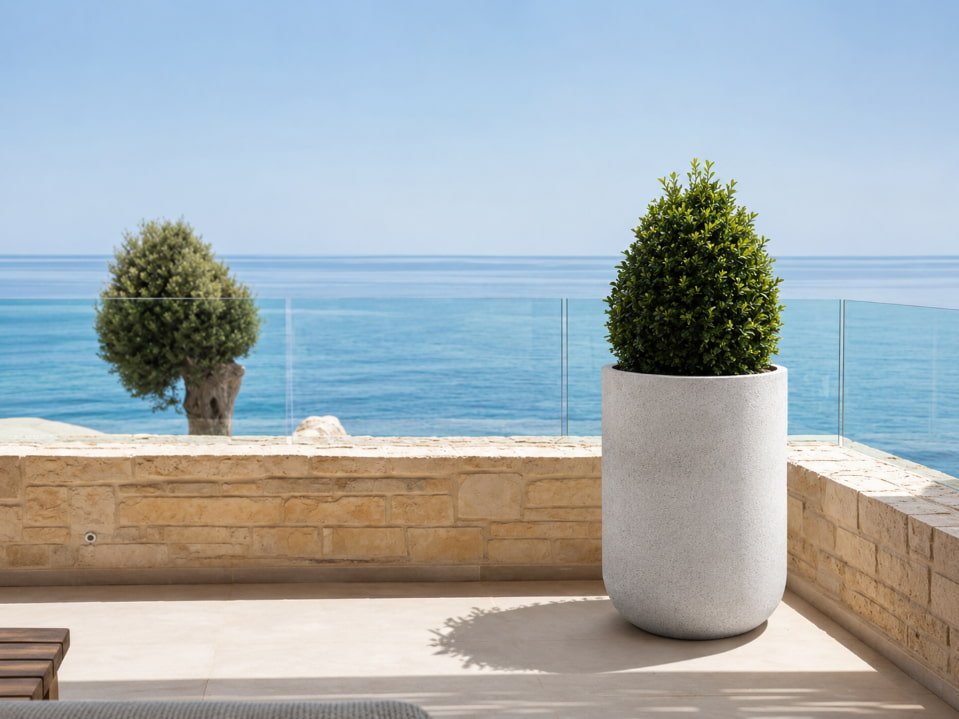
This makes them useful for rooftop gardens, podium landscapes, terraces, balconies, hotel entrances, and projects with limited lifting access.
A GRC planter is not weightless. Large planters still require proper handling.
But compared with many thick concrete alternatives, GRC can make large-format planter projects more practical.
3. They Support Custom Sizes
Commercial landscape projects rarely use only standard planter sizes.
A project may need long rectangular planters along a walkway, large round planters for a courtyard, narrow trough planters for rooftop edges, or irregular shapes that follow a building line.
GRC planters are mold-based products, which means they can be manufactured according to project drawings.
Buyers can request custom length, width, height, wall thickness, rim profile, base detail, and drainage position.
This is especially valuable when the planter must fit an exact site layout.
For commercial projects, “close enough” is not always acceptable.
4. They Can Be Made in Different Shapes
Shape flexibility is another important benefit.
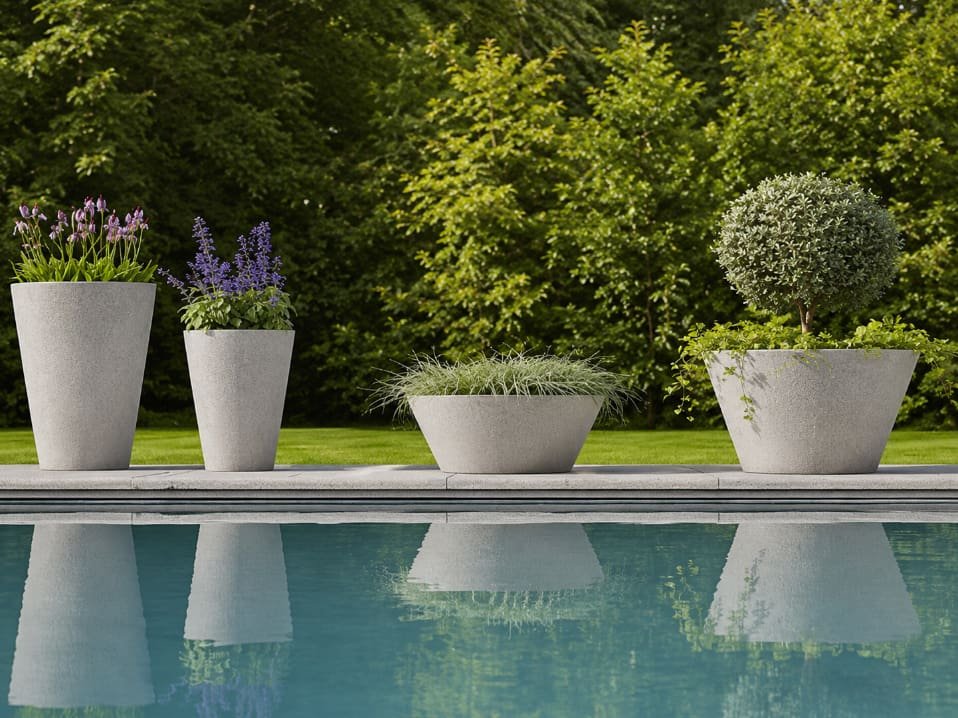
GRC planters can be produced in many forms, including square, rectangular, round, curved, L-shaped, U-shaped, and irregular designs.
They can also be developed as planter bench systems or modular landscape elements.
This flexibility gives architects and landscape designers more freedom.
Instead of forcing the design to fit standard products, the planter can be designed to fit the project.
That matters in hotels, shopping centers, public plazas, and high-end residential developments where visual detail affects the final impression.
5. They Work Well for Outdoor Use
Outdoor planters face sun, rain, irrigation, temperature changes, dirt, cleaning, and daily use.
GRC is widely used in architectural and exterior applications because it can provide a useful balance of strength, toughness, durability, moisture resistance, dimensional stability, and appearance when properly manufactured.
For planter projects, outdoor performance depends on more than the material name.
It also depends on curing, wall thickness, drainage, surface treatment, packaging, installation, and maintenance.
Still, when the supplier controls these details properly, GRC can be a strong option for long-term commercial outdoor use.
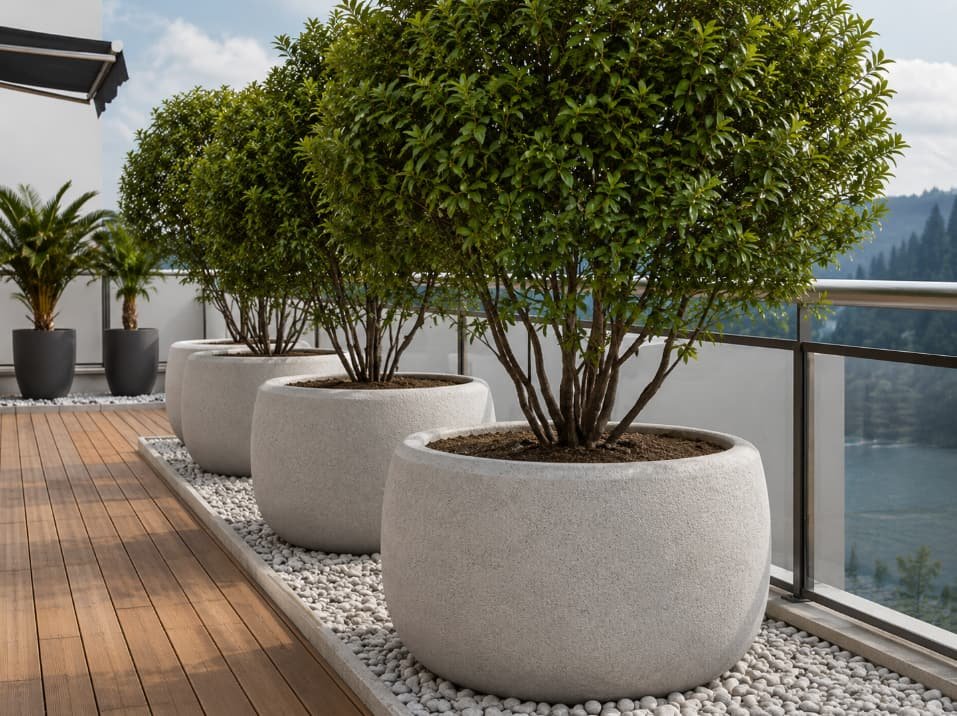
6. They Help Reduce Installation Challenges
Installation is often one of the most underestimated parts of a planter project.
A product may look good in drawings, but if it is too heavy, too large, or difficult to move on-site, the project team may face delays.
GRC planters can help reduce some of these problems because they are often lighter than traditional concrete planters of similar appearance.
This can make unloading, lifting, positioning, and final placement easier.
For rooftop gardens and completed commercial spaces, this can be especially useful.
Buyers should still confirm the installation method before production.
If the site has narrow access, elevators, finished paving, or limited lifting equipment, the supplier should know this early.
7. They Offer Good Design Consistency
In commercial landscape projects, buyers often need many planters, not just one or two pieces.
A shopping mall may need dozens of planters.
A residential development may need hundreds.
A streetscape project may require repeated modules across a long public area.
GRC planters can be produced through controlled molds, which helps maintain consistent size, shape, edge profile, and surface quality across a production batch.
This consistency is important for project appearance.
If the planters vary too much in color, size, or texture, the final landscape can look poorly coordinated.
For large orders, buyers should always approve samples and define an acceptable finish range before mass production.
8. They Can Match Different Finishes and Colors
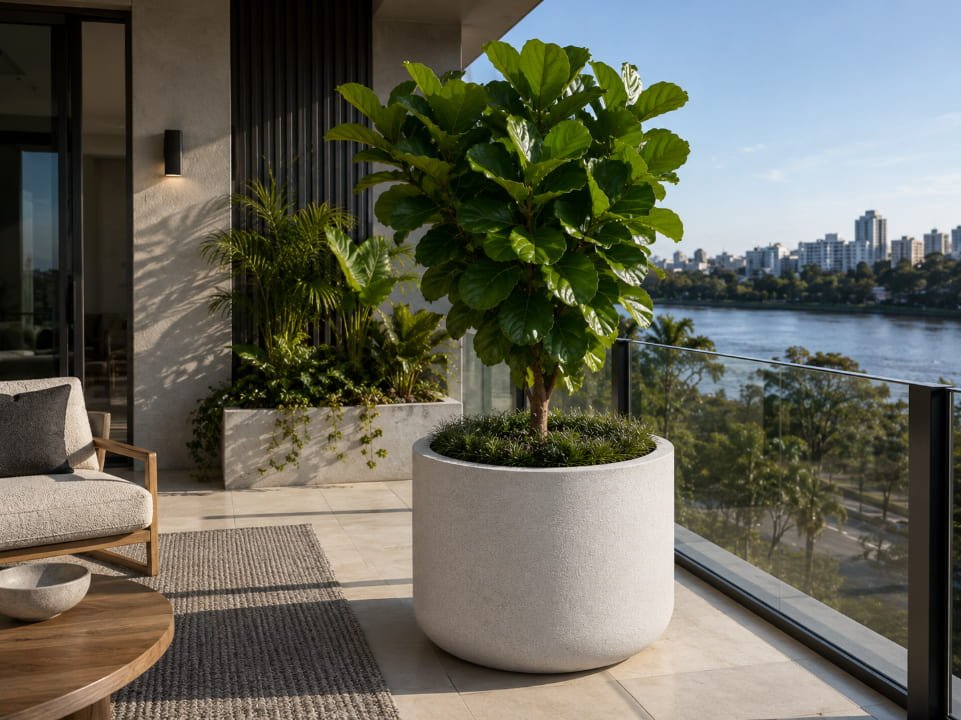
GRC planters can be made in a wide range of surface effects.
Common options include smooth concrete, matte gray, charcoal, warm stone, sandblasted texture, exposed aggregate effect, travertine-like texture, and custom colors based on samples.
This makes them easier to coordinate with paving, facade materials, outdoor furniture, metalwork, timber, planting design, and lighting.
For high-end commercial landscapes, finish selection is not a small detail.
A planter surface that matches the design intent can improve the overall quality of the space.
A finish that looks wrong can weaken the entire landscape concept.
For important projects, physical sample approval is much safer than approving color by photos alone.
9. They Can Include Project-Specific Drainage Details
Drainage is one of the most important details for outdoor planters.
Poor drainage can cause water accumulation, staining, plant health issues, and maintenance problems.
GRC planters can be customized with drainage holes, raised bases, pipe connections, internal waterproofing, overflow details, or other drainage-related features.
This is especially useful for rooftop gardens, terraces, public plazas, and commercial areas where water management must coordinate with the site system.
Drainage should be confirmed before production.
Changing drainage after the product is finished can be difficult and expensive.
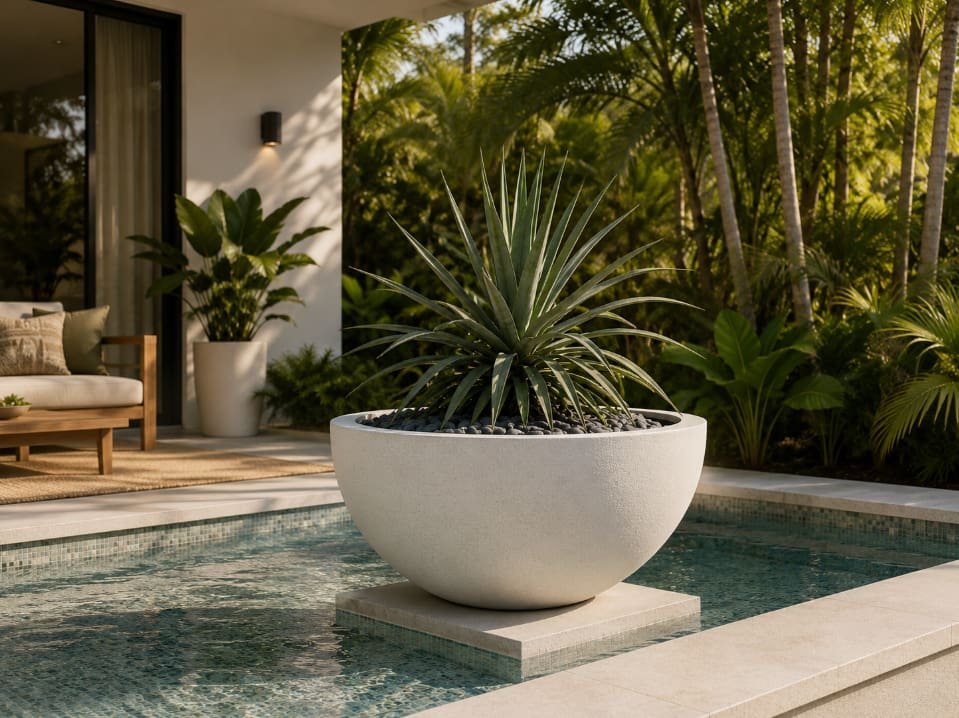
10. They Are Practical for Export Projects
For overseas buyers, a planter is not complete when it leaves the factory.
It still needs to survive packing, loading, ocean freight, port handling, local transportation, unloading, and site installation.
GRC planters can be a practical choice for export projects because they offer a good balance of architectural appearance and reduced body weight compared with many traditional concrete alternatives.
However, packaging remains critical.
Large planters need proper corner protection, surface protection, internal support, crate design, and loading planning.
For export orders, buyers should request packing photos and loading photos before shipment.
A well-made planter with poor packaging is still a risky order.
11. They Support Long-Term Project Value
Commercial landscape buyers should not evaluate planters only by unit price.
A planter affects the visual quality, installation process, maintenance workload, and long-term performance of the project.
A lower-cost planter may not be economical if it creates problems with cracking, poor finish consistency, difficult installation, weak packaging, or early replacement.
GRC planters can support long-term project value because they combine custom design, outdoor performance, architectural appearance, and practical handling.
This makes them suitable for projects where the planter is a visible and permanent landscape element.
In commercial environments, the best planter is not always the cheapest product.
It is usually the one that reduces project risk while supporting the design goal.
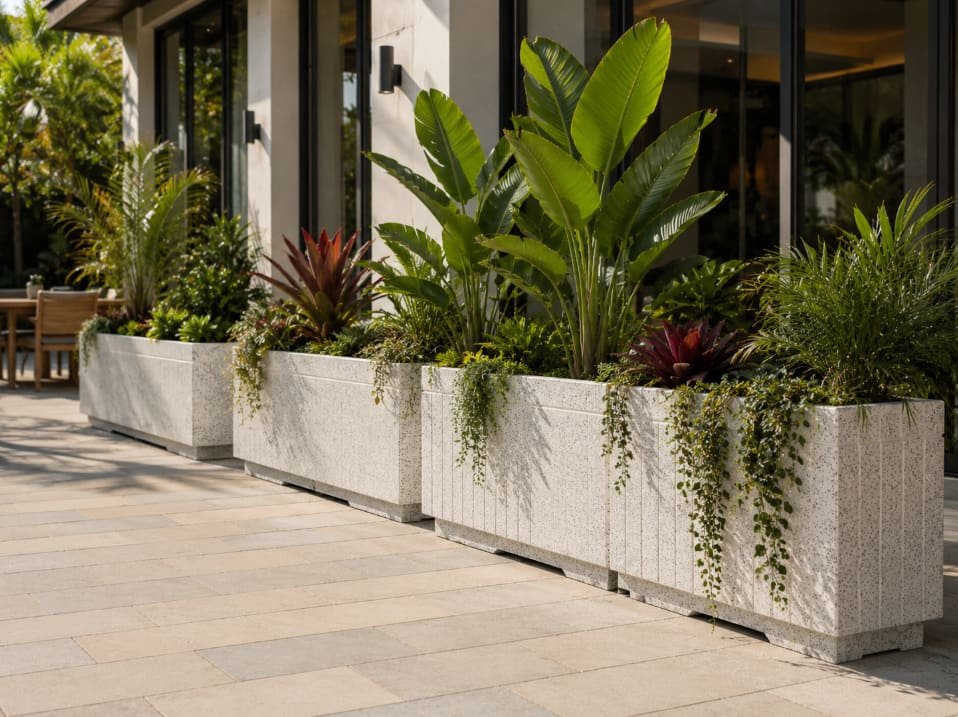
Where GRC Planters Are Commonly Used
GRC planters are commonly used in commercial and architectural landscape projects, including:
- Hotel entrances.
- Public plazas.
- Rooftop gardens.
- Shopping malls.
- Mixed-use developments.
- High-end residential projects.
- Corporate outdoor spaces.
- Streetscape projects.
- Courtyards and terraces.
- Outdoor dining areas.
These spaces usually require planters that look professional, fit the project design, and perform reliably outdoors.
What Buyers Should Check Before Ordering
Before placing an order, buyers should confirm several details.
First, confirm the size, quantity, shape, and finish.
Second, confirm drainage requirements, wall thickness, and installation conditions.
Third, ask for estimated product weight, especially for rooftop or elevated projects.
Fourth, approve physical samples if color or texture is important.
Fifth, review the packaging method for export shipping.
These steps help reduce misunderstandings and make the project easier to manage.
Common Buying Mistakes to Avoid
The first mistake is choosing only by price.
The second mistake is approving color only through photos.
The third mistake is ignoring drainage until the end.
The fourth mistake is not checking product weight before rooftop installation.
The fifth mistake is underestimating packaging for international shipping.
These issues may seem small during procurement, but they can create real problems during installation or after delivery.
Final Recommendation
GRC planters offer many benefits for commercial landscapes, especially when the project requires custom sizes, architectural appearance, outdoor durability, lighter handling, and export-ready production.
They are not the right solution for every small or temporary project.
But for hotels, plazas, shopping malls, rooftop gardens, residential developments, and streetscapes, GRC can be a practical and professional material choice.
The best results usually come from clear drawings, approved samples, confirmed drainage, proper production control, and reliable packaging.
Conclusion
From a supplier’s perspective, the real value of GRC planters is not only that they look like concrete, but that they help buyers manage project weight, customization, drainage, finish consistency, and delivery risk. For commercial landscapes, the most successful projects usually begin with clear drawings, early technical discussion, and sample approval before mass production.
Conshell is a custom GRC planter box manufacturer providing lightweight, durable, and project-specific planter solutions for commercial landscapes, rooftop gardens, hotel entrances, public plazas, streetscapes, and high-end residential developments. We support custom sizes, shapes, colors, surface finishes, drainage details, sectional designs, and export packaging based on project requirements.
If you are planning a commercial landscape project, send us your drawings, dimensions, quantity, finish requirements, drainage details, project location, and installation conditions. Our team will review your requirements and help recommend a suitable GRC planter solution for your project.